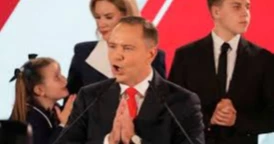
Karol Nawrocki, a conservative candidate, emerged victorious in Poland’s presidential runoff over the weekend, securing 50.89% of the vote. His narrow win came against liberal Warsaw Mayor Rafał Trzaskowski, who earned 49.11%, according to final results released Monday.
The tight race reflected Poland’s deep political divisions, highlighted during the initial round two weeks earlier. Initial exit polls had suggested a Trzaskowski win, but subsequent updates swung the outcome in Nawrocki’s favor.
Nawrocki's victory signals a likely shift toward a more nationalist and populist stance in Polish politics. He received strong backing from former U.S. President Donald Trump.
On Monday, Trzaskowski publicly congratulated Nawrocki and thanked his supporters, expressing regret at not being able to persuade a majority of voters. He emphasized his vision for a stronger and more compassionate Poland.
International Reactions
Ukrainian President Volodymyr Zelenskyy congratulated Nawrocki, highlighting Poland's strategic role in supporting Ukraine and promoting regional security. He expressed hope for continued collaboration.
Hungarian Prime Minister Viktor Orban, a political ally in terms of ideology, praised Nawrocki’s win. Meanwhile, European Commission President Ursula von der Leyen extended cautious congratulations, underlining the importance of shared democratic principles and cooperation within the EU.
Presidency’s Role in Poland
While the Polish prime minister, chosen by parliament, handles most executive duties, the presidency is influential—particularly in foreign policy and legislative vetoes. Nawrocki will take office after current conservative President Andrzej Duda finishes his term on August 6. The presidential term in Poland lasts five years and can be renewed once.
Challenges for Prime Minister Tusk
Prime Minister Donald Tusk’s government, elected in late 2023, includes a broad coalition with diverse ideologies. This internal division, combined with President Duda’s vetoes, has hindered progress on key reforms, such as liberalizing abortion laws and establishing civil unions for same-sex couples.
With Nawrocki’s upcoming presidency, Tusk faces even more resistance to delivering on promises to reverse controversial judicial changes that the EU has condemned. The political deadlock could undermine his leadership through to the next election in 2027.
Nawrocki’s Background
A 42-year-old former amateur boxer and historian, Nawrocki is relatively new to politics. He was chosen by the Law and Justice party to offer a fresh face untainted by past controversies. Most recently, he led Poland's Institute of National Remembrance, known for promoting nationalist interpretations of history and removing Soviet-era monuments—actions that led to his inclusion on a Russian wanted list.
Supporters see Nawrocki as a champion of traditional values, especially among those critical of secular and LGBTQ+ movements. Allegations linking him to criminal figures and involvement in a street fight did not significantly harm his popularity; he denied the criminal ties and defended the fight as honorable.
Support from Trump
Donald Trump openly supported Nawrocki, hosting him at the White House a month ago. The conservative CPAC group also held its first Polish conference shortly before the vote, where prominent Trump ally Kristi Noem endorsed Nawrocki.
With around 10,000 U.S. troops stationed in Poland, Noem indicated the potential for stronger defense cooperation under Nawrocki’s leadership.
Nawrocki echoed Trump’s rhetoric on several issues, including Ukraine. While vowing continued support for Ukraine, he criticized President Zelenskyy and accused Ukrainian refugees of straining Poland’s public services, pledging to prioritize Polish citizens in areas like healthcare and education.