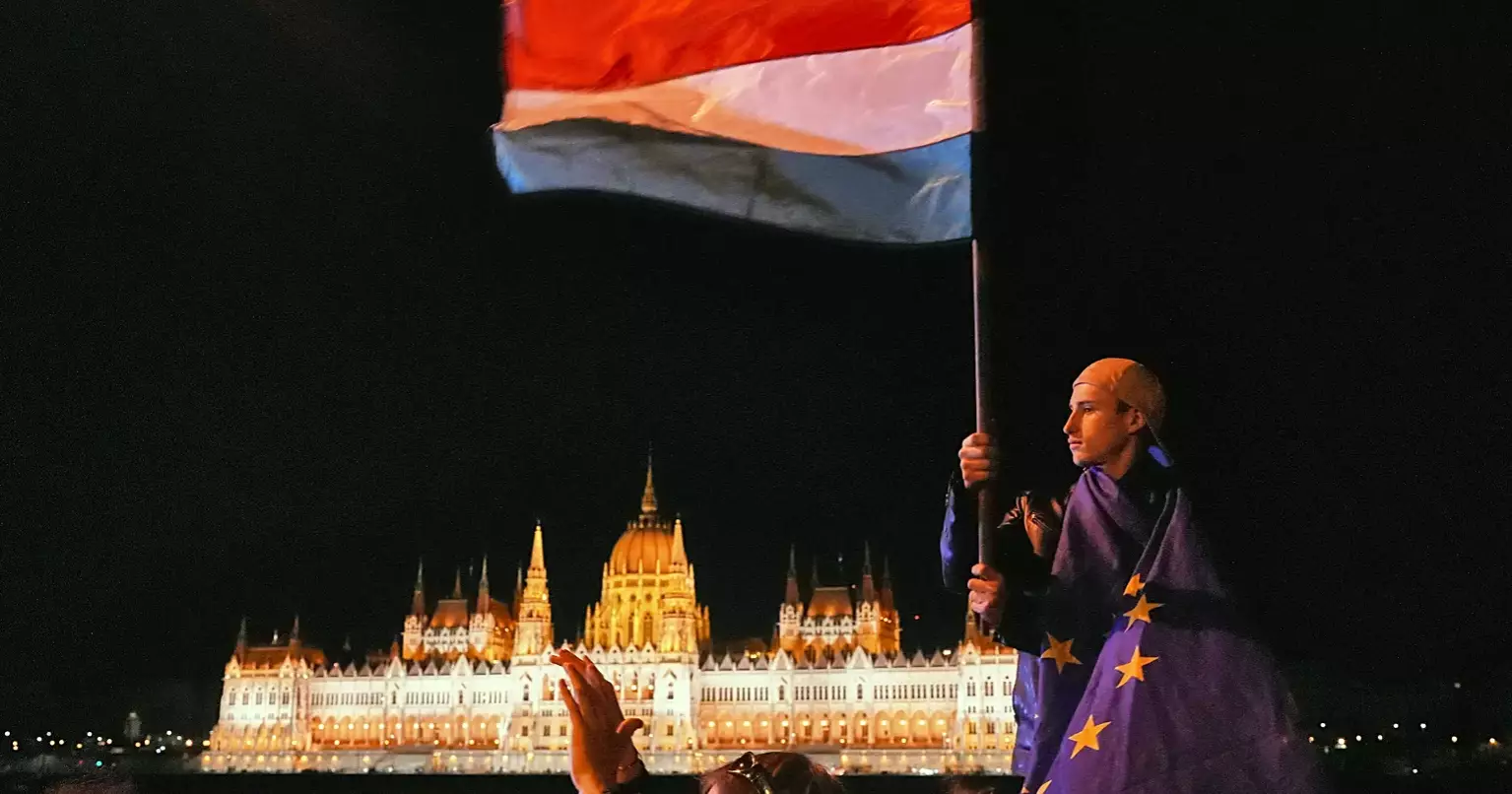
European Union officials held talks in Budapest on Friday with representatives of election winner Péter Magyar, focusing on releasing billions of euros in frozen funds and advancing cooperation ahead of his government taking office next month.
The discussions include efforts to unlock around €17 billion ($20 billion) in EU aid withheld during the tenure of outgoing Prime Minister Viktor Orbán, as well as coordination on key issues such as financial support for Ukraine.
European Commission spokesperson Paula Pinho said preliminary talks are aimed at ensuring swift action once the new government assumes office, noting that “the clock is ticking” on several urgent matters.
The EU froze funding to Hungary over concerns about corruption, democratic backsliding and judicial independence during Orbán’s 16-year rule. Both Brussels and Magyar’s team have since prioritised unlocking the funds to support Hungary’s struggling economy.
European Commission President Ursula von der Leyen said reforms are needed to restore the rule of law, align with EU values and enable access to the funds.
Magyar, whose Tisza party secured a parliamentary supermajority, has pledged to pursue reforms in judicial independence, media freedom and anti-corruption measures to meet EU conditions. He has also signalled support for a previously agreed €90 billion EU loan package for Ukraine, which Orbán had blocked.
The frozen funds include €10 billion in post-pandemic recovery support and €6.3 billion in cohesion funds aimed at boosting weaker economies. Officials are racing to release the recovery funds before an August deadline.
Hungary, a major recipient of EU funding, has faced longstanding criticism from the bloc over its governance standards. While Orbán rejected such allegations, the European Commission suspended funds in 2022, partially releasing some in 2023 after reforms.
Analysts say Magyar could move quickly to implement required legislative changes, including reforms to judicial appointments, to unlock the funds.
Hungary may also benefit from additional financing under the EU’s €150 billion Security Action for Europe (SAFE) initiative, which supports defence readiness. If accessed, the combined funding could amount to a significant share of the country’s economy.