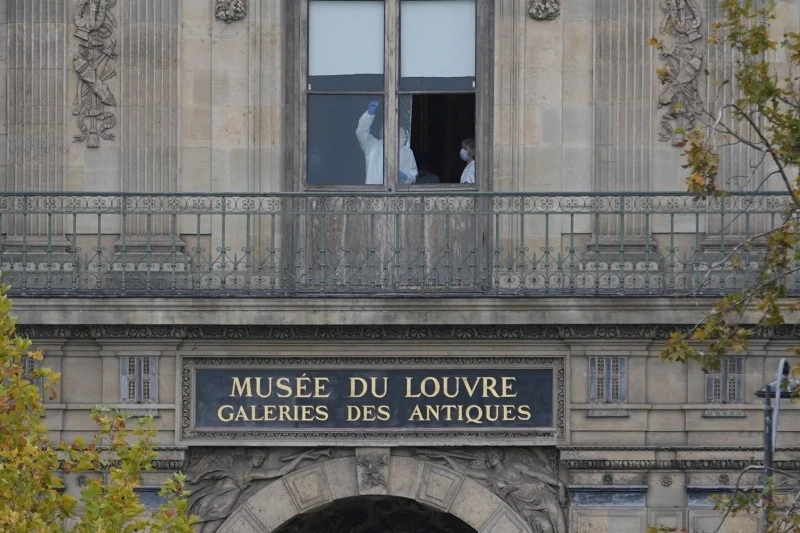
Just days after the shocking theft at Paris’s Louvre Museum, speculation is mounting over the possible fate of the stolen royal jewels, valued at more than $100 million (88 million euros).
Some experts caution that the items could soon — if not already — be melted down or broken into smaller pieces, which could later be sold as new necklaces, earrings, or other jewelry without attracting much attention.
“You don’t even have to put them on a black market, you just put them in a jewelry store,” said Erin Thompson, an art crime professor at the John Jay College of Criminal Justice in New York. “It could be sold down the street from the Louvre."
Thompson and others say this approach has become more common with stolen jeweled and metal goods, as thieves try to cover their tracks and profit. Christopher Marinello, lawyer and founder of Art Recovery International, added: “By breaking them apart, they will hide their theft.” He noted that moving the pieces out of France and through jewel cutters in other countries could make them even more “traceless.”
While dividing or melting the items reduces their historical value, it also makes them easier to sell. “The real art in an art heist isn’t the stealing, it’s the selling,” explained Robert Wittman, former FBI art crime investigator. He expressed skepticism that Sunday’s thieves could successfully monetize the Louvre jewels intact, pointing to their identifiable clarity and historic gold composition.
“Because of what they are, there’s really no point destroying them,” Wittman said.
Scott Guginsky, executive vice president of the Jewelers’ Security Alliance, noted: “It’s not something that you can move on the open market. It’s nothing that can go through an auction house." He added, “I can’t see them stealing it without having an idea what they want to do. There’s always a person willing to buy stolen jewelry. No matter what it is, somebody will buy it.”
Sara Yood, CEO of the Jewelers Vigilance Committee, said the age of some jewels could make them harder to track if altered. “Because these are historical pieces, it’s rather unlikely that it has those identifying features,” she noted.
Experts also point out that bigger gems can be recut to become unrecognizable, although finding skilled people to do so without questions is a challenge. Thompson added, “the guys who actually enter the museums are usually all hired hands, and they’re almost always caught in these cases.”
Source: AP