
Air travel in Afghanistan has come to a halt after the Taliban government imposed a nationwide internet shutdown, leaving the country largely cut off from the outside world and crippling essential services.
The suspension, which began Monday evening, has severely disrupted communications, banking, payments and online education – considered a vital lifeline for many women and girls barred from attending schools and universities.
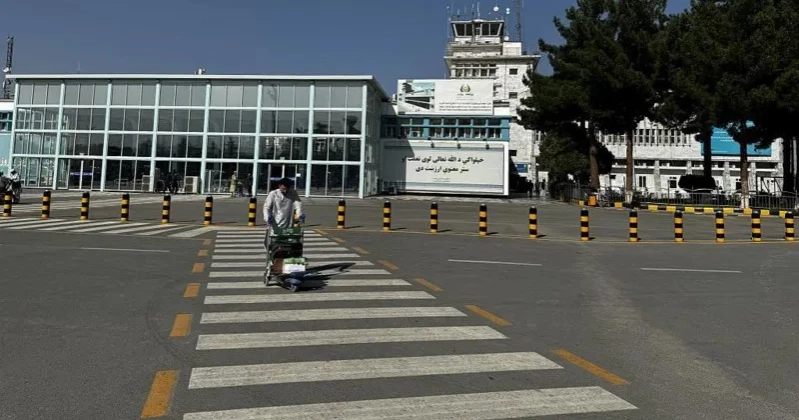
Kabul’s main airport was described as “nearly deserted” by residents, with no visible arrivals or departures. Flight-tracking site Flightradar24 showed a handful of flights cancelled on Tuesday, while many others were marked “unknown.” Some passengers were told that flights would not resume until Thursday at the earliest.
Although life in Kabul appeared outwardly “normal,” one local resident said, “there is no communication at all.”
‘We are blind without internet’
The blackout followed weeks of Taliban restrictions on fibre-optic connections across several provinces, which authorities said was intended to curb “immorality.” Until Monday, the capital Kabul had remained unaffected, but service was abruptly cut at around 5 pm local time. By Tuesday morning, people across the country woke up to find services paralyzed.
Najibullah, a 42-year-old shopkeeper in Kabul, told AFP that residents felt “blind without phones and internet.”
“All our business relies on mobiles. Deliveries are with mobiles. It’s like a holiday—everyone is at home. The market is totally frozen,” he said.
Banks in Kabul remained open but struggled to dispense cash amid long queues. In Helmand province, however, a money changer said all banks were closed. International agencies also reported losing contact with their Kabul offices, while mobile internet and satellite TV were badly disrupted.
Privately owned broadcaster Tolo News urged viewers to follow its social media accounts, warning of expected disruptions to TV and radio networks. Local journalists said they were unable to call interviewees, forcing them to send crews directly to people’s homes.
Education cut off
The blackout has dealt a heavy blow to Afghan women and girls, many of whom rely on online study as their last access to education.
“My daughters’ online English classes are gone,” a money changer in Takhar province told the BBC. “Their last opportunity to study and stay engaged is now gone.”
Another woman said she had hoped to finish her studies and secure online work, but now “that dream has been destroyed.” A university student, whose midwifery course was banned last year, said: “When I heard that the internet had been cut, the world felt dark to me.”
Wider restrictions
NetBlocks, an internet watchdog, described the situation as a “total internet blackout,” noting that telephone services were also affected. Taliban officials in Balkh province had earlier defended the fibre-optic ban as an effort to curb “evils.”
The move is the latest in a series of restrictions imposed since the Taliban returned to power in 2021 after the withdrawal of US and allied forces. Earlier this month, authorities removed books written by women from university curricula and banned the teaching of human rights and sexual harassment. Women are already barred from education beyond the age of 12, with midwifery courses quietly discontinued in late 2024.
Source: Agency