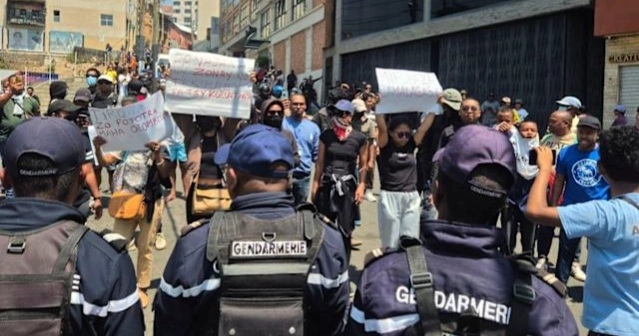
From South America’s Andes to Asia’s Himalayas, a new generation is rising in protest. Around the world, young people angry at governments and frustrated with inequality, corruption, and economic hardship are leading a wave of demonstrations that share a common identity — “Gen Z.”
In Madagascar, President Andry Rajoelina was forced to flee the country this week following a military coup triggered by weeks of youth-led protests under the banner “Gen Z Madagascar.” Their movement mirrors others across Nepal, the Philippines, Indonesia, Kenya, Peru, and Morocco — all driven by a deep sense of disillusionment with political elites.
“These protests are united by a belief that traditional politics fails to represent young people’s concerns — from corruption and climate change to inequality,” said Sam Nadel, director of the UK-based Social Change Lab.
Despite differing local grievances, many movements began with anger over government neglect or repression. In Morocco, protesters from a group called “Gen Z 212” have demanded better health and education services. In Peru, anger over pension reforms expanded into calls for action on corruption and insecurity. In Indonesia, violent protests erupted over rising costs and lawmakers’ privileges, forcing cabinet changes.
One of the most dramatic movements was in Nepal, where mass protests led to the resignation of the prime minister in September. Demonstrators there drew inspiration from earlier uprisings in Sri Lanka (2022) and Bangladesh (2024).
Gen Z protests are shaking Morocco over government spending and social inequality
A common visual symbol has emerged across borders — a black pirate flag featuring a skull with a straw hat, borrowed from the Japanese anime One Piece. It has been seen in protests from Kathmandu to Jakarta and Lima, symbolizing defiance against corrupt systems.
In Peru, 27-year-old protester David Tafur said, “We’re fighting the same battle — against corrupt and abusive officials.” His country’s president, Dina Boluarte, was recently replaced after months of unrest and investigations into corruption and deadly crackdowns.
Digital mobilization has also played a critical role. Using TikTok, Instagram, X, and even gaming chat apps like Discord, protesters have coordinated rallies and exposed corruption. In Nepal, after a social media ban, young people used VPNs to organize demonstrations and share information.
“The Gen Z protests in Nepal inspired others across borders,” said protester Yujan Rajbhandari. “The digital space has made us global citizens — connected in our fight for justice.”
Source: AP