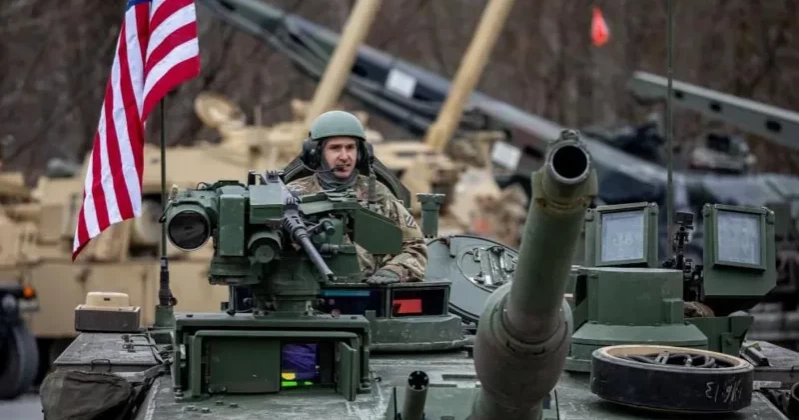
Germany’s defence minister said the United States’ decision to withdraw about 5,000 troops from the country was “foreseeable,” as NATO seeks more details from Washington amid concerns over the alliance’s future.
Speaking to DPA news agency, Defence Minister Boris Pistorius said the presence of US forces in Europe especially in Germany remains important for both sides. He added that Berlin still values close military cooperation with Washington.
NATO spokeswoman Allison Hart said the alliance is in talks with the US to better understand the scope and impact of the decision.
President Donald Trump indicated that more cuts could follow. Asked about the troop withdrawal, he said the US would reduce its forces “way down,” suggesting the number could be far higher than 5,000, though he gave no specifics.
The move comes after tensions between Trump and German Chancellor Friedrich Merz, who recently criticised the US over its handling of negotiations with Iran, saying Washington had been “humiliated.”
The US currently has more than 36,000 troops stationed in Germany — its largest military presence in Europe compared to about 12,000 in Italy and 10,000 in the United Kingdom. Trump has also floated the idea of reducing troop levels in Italy and Spain.
The decision follows earlier steps to scale back US forces in Romania, part of a broader strategy to shift military focus toward the Indo-Pacific region.
The latest move has raised concerns within the 32-member NATO alliance that reduced US presence could weaken collective security.
Polish Prime Minister Donald Tusk warned that internal divisions, rather than external threats, pose the greatest risk to the transatlantic alliance and urged members to act to reverse the trend.
In Washington, senior Republican lawmakers also voiced concern. Senator Roger Wicker and Representative Mike Rogers said maintaining a strong US military presence in Europe is vital for deterrence.
Pistorius said Europe must take on greater responsibility for its own security, noting that Germany has significantly increased defence spending in recent years.
Under the current government, Germany’s defence budget is expected to rise to €105.8 billion by 2027, pushing total defence-related spending to about 3.1% of GDP, including support for Ukraine.
Trump has long criticised NATO allies, including Germany, for not meeting defence spending targets, though Berlin has recently moved closer to those goals.
NATO officials say the US decision highlights the need for European countries to further boost defence investment and share more of the security burden.
The troop withdrawal is expected to be completed within six to twelve months, according to the Pentagon.
Tensions between Trump and allies have also grown over disagreements on military operations in the Strait of Hormuz, where Iran has restricted shipping following US and Israeli strikes earlier this year.
With inputs from BBC