
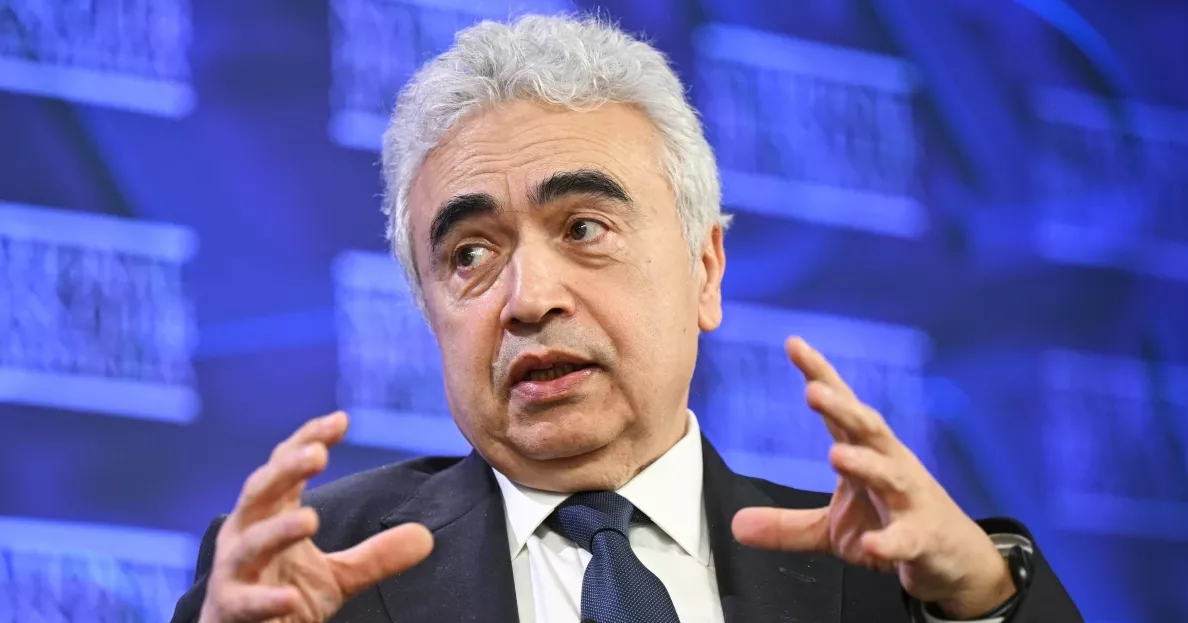
The head of the International Energy Agency warned Monday that the global economy faces a “major, major threat” from the ongoing Iran war, citing severe disruptions to oil and gas supplies.
IEA Executive Director Fatih Birol said no country would be immune if the crisis continues, describing the situation as “very severe.”
Speaking in Canberra, Birol said the impact on energy markets has already surpassed the combined oil shocks of 1973 and 1979. He noted that global oil supply losses have reached 11 million barrels per day, exceeding the roughly 10 million barrels lost during the two earlier crises.
He also said the disruption to gas supplies has been nearly double that seen after the Russia-Ukraine war, with losses now estimated at around 140 billion cubic meters.
The warning comes as tensions escalate in the Middle East, with Israel launching fresh strikes on Tehran and Donald Trump threatening to target Iran’s power plants if it fails to reopen the Strait of Hormuz.
Iran has responded by warning it would retaliate against US and Israeli energy infrastructure, raising fears of prolonged disruption to global energy flows.
Birol said at least 40 energy facilities across nine countries have been severely damaged, affecting critical sectors including petrochemicals, fertilizers, sulfur and helium, with wider implications for global trade.
He warned that a prolonged conflict could drive sustained high energy prices and fuel inflation worldwide.
To stabilise markets, the IEA has already released a record 400 million barrels of oil from strategic reserves and is consulting with governments on the possibility of further releases.
Birol stressed that reopening the Strait of Hormuz remains the most critical step to easing the crisis, as the key shipping route continues to face disruptions amid the conflict.