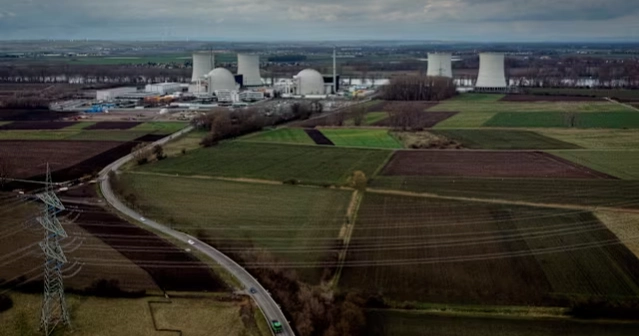
Nuclear energy is making a strong global comeback about 40 years after the Chernobyl disaster, as countries look for reliable and low-carbon electricity amid rising energy demand and geopolitical tensions.
The 1986 Chernobyl accident in then Soviet Ukraine triggered widespread fear about nuclear power and slowed its expansion across Europe and other regions. Later, Japan’s Fukushima disaster in 2011 further weakened public support. But experts say the trend is now reversing.
Today, more than 400 nuclear reactors are operating in 31 countries, while around 70 new reactors are under construction. Nuclear power now generates about 10% of global electricity and roughly a quarter of low-carbon energy worldwide.
The industry has also improved over time with stronger safety systems and lower construction and operating costs.
Fatih Birol, executive director of the International Energy Agency, said nuclear power is regaining momentum globally. He linked the renewed interest partly to recent wars and energy security concerns.
“I am 100% sure nuclear is coming back,” Birol said, adding that the technology is increasingly seen as a secure source of electricity across the Americas, Europe and Asia.
The United States is the world’s largest producer of nuclear power with 94 operating reactors, contributing about 30% of global nuclear electricity output. Washington is now aiming to quadruple its nuclear capacity by 2050. A senior US official recently said nuclear power is essential for industry growth, artificial intelligence demand and long-term energy security.
China operates 61 reactors and is building nearly 40 more, positioning itself to become the global leader in nuclear capacity. Russia is also expanding rapidly, both at home and abroad, building 20 reactors in different regions including Europe, Asia, Africa and the Middle East.
In Europe, the European Commission now considers nuclear power part of its clean energy mix alongside wind and solar. Commission President Ursula von der Leyen has called Europe’s earlier reduction of nuclear power a “strategic mistake” and said the bloc is now rethinking its approach to energy security and climate goals.
France remains Europe’s nuclear leader, generating nearly 70% of its electricity from 57 reactors. President Emmanuel Macron has announced plans for new reactors to strengthen energy independence and cut emissions.
Other European countries remain divided. Germany shut down its last nuclear reactors in 2023 after decades of opposition, while Belgium has extended the life of its plants. Spain still plans a gradual phase-out of nuclear power.
Japan has restarted 15 reactors after safety reviews following Fukushima, with more expected to resume operations.
In Africa, South Africa remains the only country with a nuclear plant, while Egypt is building one with Russian support and several others are exploring the technology.
Russia, the pioneer of several nuclear projects, is also modernizing its domestic fleet and expanding exports. It continues to build reactors in multiple countries and has strengthened older Soviet-era designs with new safety upgrades.
The renewed global interest reflects a broader shift in energy thinking. Rafael Grossi, head of the International Atomic Energy Agency, said countries now recognize that stable and low-carbon electricity will be essential to meet rising demand.
From Chernobyl’s legacy to today’s energy challenges, nuclear power is once again becoming a key part of global energy strategies.