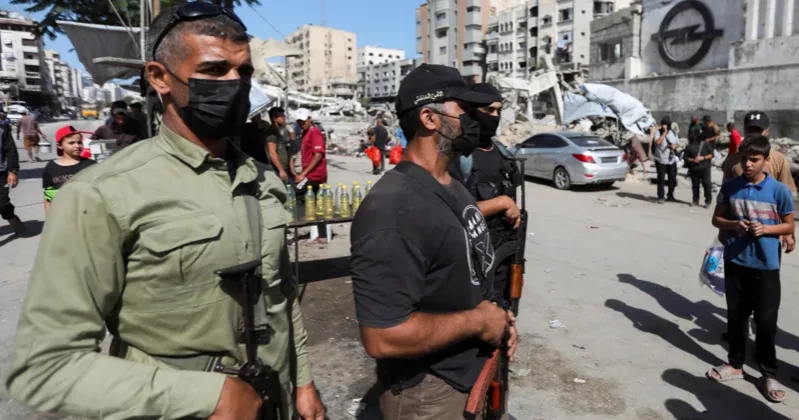
Hamas has been steadily reasserting control over the Gaza Strip in the months following a ceasefire with Israel, despite suffering heavy losses during the war, according to residents, traders and activists in the territory.
The ceasefire, brokered under a US-backed initiative last October, brought an end to nearly two years of fighting that devastated Gaza Strip. Much of Gaza’s infrastructure was destroyed, large parts of the population were displaced, and more than 72,000 Palestinians were killed in Israeli attacks, according to Gaza’s health authorities.
Since the fighting subsided, local residents say Hamas has gradually restored its authority over security, taxation and basic government services. Police and internal security forces have returned to the streets, resuming patrols, controlling markets and pursuing those accused of collaboration or dissent.
“Hamas has regained control over more than 90 percent of the areas where it operates,” said Gaza-based activist Mohammed Diab. He said residents are once again required to deal with Hamas-run institutions for identity documents, health services and legal matters, as the group moves to reassert influence over courts and the judiciary.
Traders in markets across Gaza described a renewed enforcement of municipal fees and taxes. Several said Hamas authorities were aggressively collecting rent and levies at a time when livelihoods remain shattered.
“They come every day with the same demands and threats,” said one displaced stallholder in Gaza City, speaking on condition of anonymity. “They say if we do not pay, they will throw us and our goods into the street. We cannot afford these payments.”
With the easing of restrictions after the ceasefire, food and basic goods have begun flowing more freely into Gaza. However, traders with licences to import goods from Israel say Hamas has reinstated strict controls over taxation, with levies varying by type and quantity of merchandise.
One importer said taxes could start from tens of thousands of shekels, adding that force or intimidation was used against those who refused to comply. Activists allege that payments are made in cash to avoid tracking and that Hamas has rebuilt a database of traders operating in the enclave.
Responding to the allegations, Hamas spokesman Hazem Qassem said Gaza was in a state of emergency and that “exceptional measures” were sometimes necessary. He argued that actions taken against traders were administrative and aimed at preventing profiteering, denying that they were linked to Hamas as a movement.
Gaza has been governed by Hamas since 2007, and analysts say revenue collection is central to the group’s ability to pay salaries and maintain influence. The Israel Defense Forces have accused Hamas of using the ceasefire period to regroup and rebuild its military capacity.
Israeli officials say attacks on their forces have continued since the truce began, while Gaza’s health authorities report hundreds of Palestinians killed in Israeli strikes during the same period.
The next phase of the US peace initiative for Gaza, led by President Donald Trump, hinges on the full disarmament of Hamas and the transfer of civilian authority to a Palestinian technocratic body. Negotiators are still grappling with how such disarmament would be implemented and verified.
Hamas has said it is prepared to hand over governance to a new technocratic council, but critics and local activists say there is little evidence the group is ready to relinquish real power. Recent appointments to government positions and the visible presence of Hamas officials at key crossings and evacuation points have fuelled doubts about its intentions.
As international plans for Gaza’s reconstruction move forward without Hamas’s formal involvement, analysts say the struggle for control is shifting from territory to people. After years of war over land and security, the contest for Gaza’s population — a key source of authority and revenue — appears to be entering a decisive phase.
With inputs from BBC