
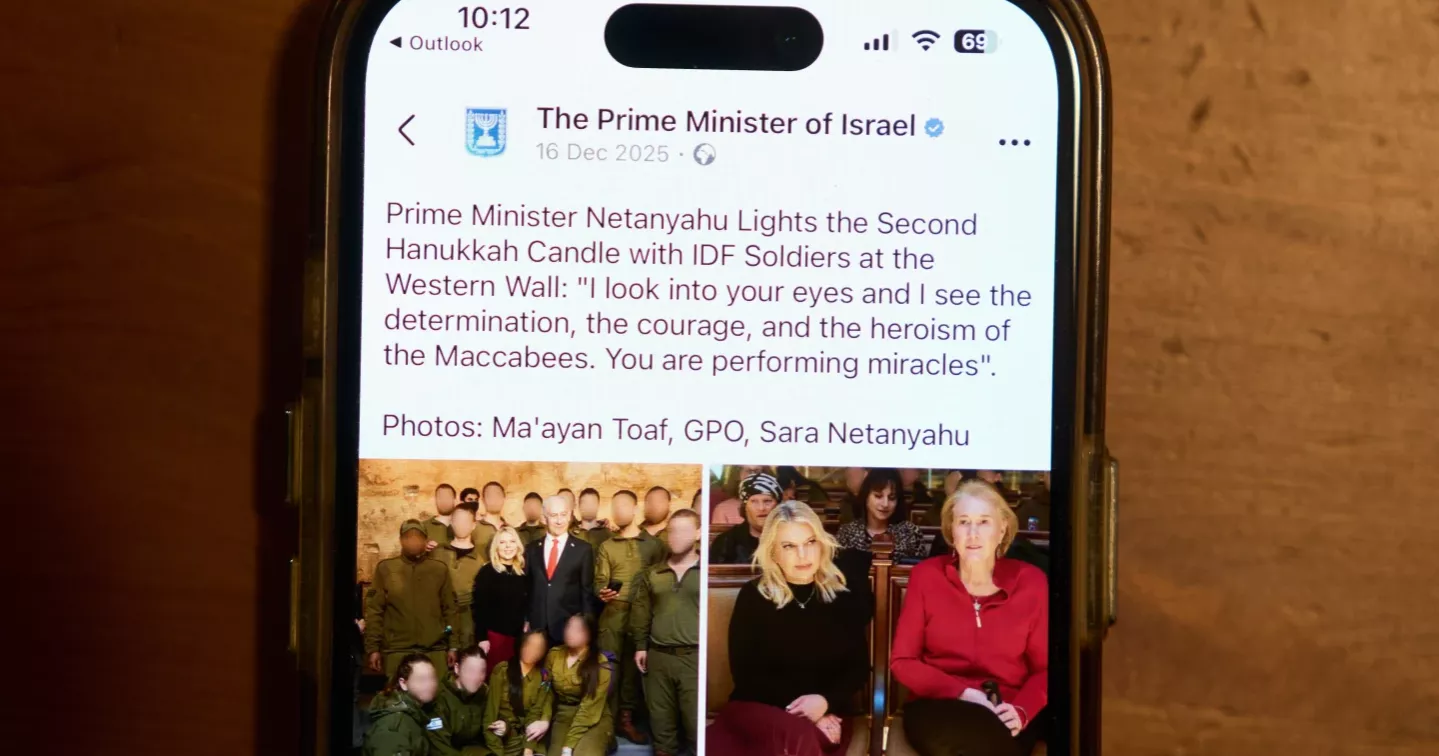
Heavily retouched photos of Israel’s First Lady Sara Netanyahu, shared in official government announcements, have raised concerns about transparency, ethics, and the integrity of Israel’s state archives, officials and experts said.
The edited images show Sara Netanyahu with flawless skin, defined eyes, and perfectly styled hair while lighting Hanukkah candles at the Western Wall alongside Prime Minister Benjamin Netanyahu, U.S. Ambassador Mike Huckabee, and Israeli soldiers. Critics said that while photo editing is common on social media, its use in official releases distorts reality and risks compromising archival records.
Veteran journalist Shabi Gatenio, who reported the story for The Seventh Eye, said the images, if included in official archives, “will forever infect it with a virtual reality that never existed.” In response, the government has begun crediting Sara Netanyahu in press releases that feature retouched images, though it remains unclear if all edited photos from last year will be archived.
Government Press Office Director Nitzan Chen said the prime minister’s photos are never altered, but images of the first lady appear to have been digitally enhanced. Forensic experts noted modifications to smooth her skin, lighten her complexion, and remove wrinkles in photos taken during visits to Washington, D.C., and New York.
The controversy has prompted debate about the broader implications of AI and photo manipulation in politics. Netanyahu’s official Instagram has posted AI-generated or altered content, including images with U.S. President Donald Trump. Experts warned that the practice reflects a growing trend among world leaders and raises questions about public trust and historical record-keeping.
“This is about something bigger than making someone look younger,” said digital forensics expert Hany Farid. “It’s about trust. Why should I trust any official photo coming out of that administration?”
Israel’s Justice Ministry and Government Press Office are reviewing guidelines for identifying and labeling edited images, while some media outlets, including the Times of Israel, have refused to publish manipulated state photos. Analysts say the case highlights the challenge of maintaining accurate government archives in the digital age.