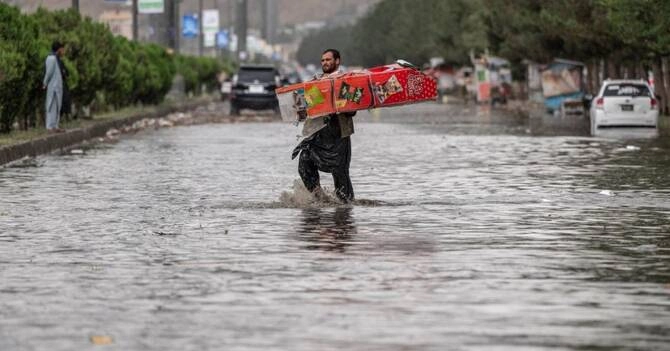
Afghanistan’s first major rainfall and snowfall of the season ended weeks of dry weather but unleashed flash floods in several regions, leaving at least 17 people dead and 11 others injured, officials said Thursday.
Among the victims were five members of a single family who died when the roof of their home collapsed in Kabkan district of western Herat province, said Mohammad Yousaf Saeedi, spokesman for the provincial governor. Two of the deceased were children.
According to the National Disaster Management Authority (NDMA), most casualties have been reported since Monday in flood-hit districts. The severe weather disrupted normal life across central, northern, southern and western parts of the country, NDMA spokesman Mohammad Yousaf Hammad said.
The floods also caused widespread damage to infrastructure, killed livestock and affected around 1,800 families, deepening hardship for already fragile urban and rural communities, Hammad added.
He said assessment teams have been dispatched to the hardest-hit areas, with damage evaluations still underway to identify further humanitarian needs.
Afghanistan, like Pakistan and India, is particularly prone to extreme weather, especially sudden flooding following seasonal rains. Years of war, weak infrastructure, deforestation and the growing effects of climate change have worsened the impact of such disasters, particularly in remote areas where many homes are built from mud.
The United Nations and aid agencies have warned that Afghanistan will remain among the world’s most severe humanitarian crises in 2026. This week, the UN launched a $1.7 billion appeal to support nearly 18 million people in urgent need of assistance.
Source: AP