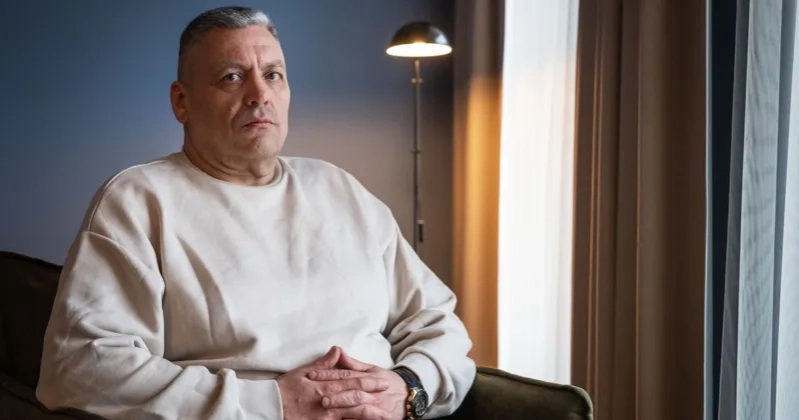
A Lithuanian man charged in a Russian-led parcel bomb plot targeting the UK and Poland has spoken publicly for the first time, insisting he had no knowledge of explosives hidden inside the deliveries.
Aleksandr Suranovas, 53, told investigators and journalists that he agreed to post four parcels containing ordinary items like sex toys, body lotion, and massage cushions, believing it was legitimate work offering decent pay. Unknown to him, the parcels contained sophisticated incendiary devices using nitromethane, a high explosive.
The devices, hidden inside cosmetics and cushions, were triggered remotely. Three of the parcels exploded in July 2024 – one at Leipzig airport in Germany, another outside Warsaw in Poland, and one at a DHL warehouse in Birmingham. One device malfunctioned. Fortunately, no one was injured.
Suranovas said he was recruited online by an acquaintance known as “HK,” who communicated via Telegram. He collected the parcels in Vilnius and sent them to addresses in London, Birmingham, and Warsaw using DHL and DPD courier services. Investigators say he was the last link in a chain of operatives coordinated remotely from Russia.
Authorities in Lithuania and Poland have arrested 22 people in connection with the operation, which security officials say was directed by Russian military intelligence, the GRU. Moscow has consistently denied any involvement.
Suranovas, who has been on intensive supervision since his release from custody, admitted he handled the parcels but denied knowing about the explosives. “I would never have agreed to that. I am no spy,” he told the BBC.
Lithuanian security experts warn the case exposes Russia’s increasing use of individuals in Europe for sabotage operations, often recruited through criminal networks or online job offers. “It’s active aggression against our nations,” said Vilmantas Vitkauskas, head of Lithuania’s National Crisis Management Centre.
Investigators noted that other members of the plot, including a young Ukrainian identified as Vladislav Derkavets, were directly involved in preparing the devices. Russia’s strategy, experts say, often relies on unwitting intermediaries to maintain deniability.
The plot, according to Lithuanian authorities, was intended to intimidate countries supporting Ukraine, though the ultimate aim – whether to cause large-scale destruction or sow fear – remains unclear. Some parcels sent later were empty, likely to test new routes.
Suranovas has a prior criminal record related to fraud and theft in Europe, but he insists he was only a courier and had no ties to Russian intelligence. Authorities continue to investigate other operatives allegedly involved in planning similar attacks.
This is the first public account from anyone directly linked to the parcel plot, highlighting how Russia allegedly recruits and uses individuals across Europe to carry out covert sabotage operations.
With inputs from BBC