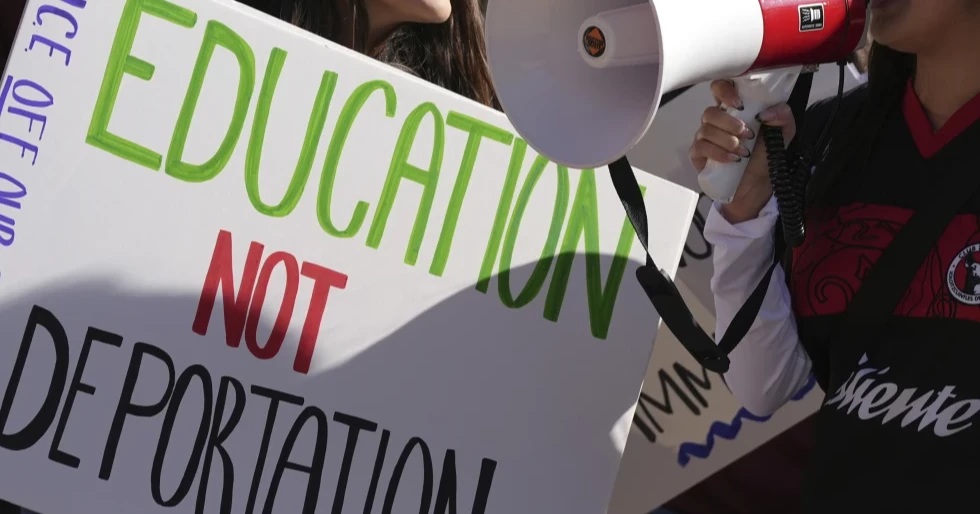
The U.S. government announced Friday that it is reversing recent terminations of legal status for international students, following widespread legal pushback. Immigration and Customs Enforcement (ICE) had removed many students from its federal database, stripping them of their legal right to stay in the country. However, multiple federal judges across the country have since issued temporary orders restoring the students’ status as part of lawsuits contesting the terminations.
Foreign students face visa revocation
Over 1,200 international students were affected, losing their visas or legal status—putting them at risk of deportation. Many reported being unaware of any serious violations, with some citing only minor issues or confusion about the reasons for the crackdown. As a result, some students left the U.S., while others have been forced to stop attending classes or go into hiding.
Government says it will restore student status
Word of the policy pivot came Friday from lawyers representing the government in several of the lawsuits.
Iran to ink $4b oilfields deal with Russia
A lawyer for the plaintiff in one of the lawsuits, Brian Green, provided The Associated Press with a copy of a statement a government lawyer emailed to him on the restoration of legal status for people whose records were recently terminated.
It says: “ICE is developing a policy that will provide a framework for SEVIS record terminations. Until such a policy is issued, the SEVIS records for plaintiff(s) in this case (and other similarly situated plaintiffs) will remain Active or shall be re-activated if not currently active and ICE will not modify the record solely based on the NCIC finding that resulted in the recent SEVIS record termination.”
SEVIS is the Student and Exchange Visitor Information Systems database that tracks international students’ compliance with their visa status. NCIC is the National Crime Information Center, a database of criminal justice information maintained by the FBI.
Tricia McLaughlin, an assistant Homeland Security secretary, said ICE had not reversed course on any visa revocations but did “restore SEVIS access for people who had not had their visa revoked.”
Several colleges said Friday they noticed legal status already had been restored for some of their students, but uncertainty remained.
“It is still unclear whether ICE will restore status to everyone it has targeted and whether the State Department will help students whose visas were wrongly revoked,” said Greg Chen of the American Immigration Lawyers Association.
Legal fights may not be over
Green, who is involved in lawsuits on behalf of several dozen students, said his cases only sought restoration of the student status and that he would be withdrawing them as a result of the statement Friday from ICE.
But lawyers in the Oakland case are seeking a nationwide order from the court prohibiting the government from arresting or incarcerating students, transferring them to places outside their district or preventing them from continuing work or studies.
Pam Johann, a government lawyer, said it was premature to consider anything like that given that ICE was in the process of reactivating records and developing a policy. “We should take a pause while ICE is implementing this change that plaintiffs are seeking right now, on its own,” she said.
But U.S. District Judge Jeffrey S. White asked her to humor the court.
“It seems like with this administration there’s a new world order every single day,” he said. “It’s like whack-a-mole.”
He ordered the government to clarify the new policy.