
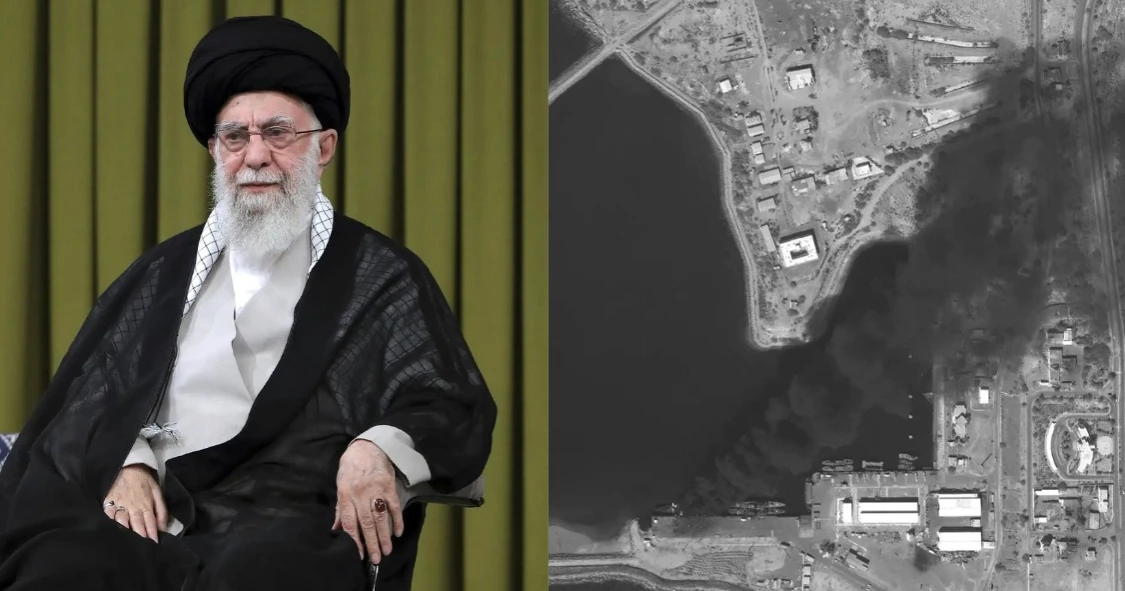
After more than 40 years as Iran’s supreme leader, Ayatollah Ali Khamenei was killed in coordinated US and Israeli airstrikes on Saturday morning, along with several senior military officials, including top commanders of the Iranian Revolutionary Guard Corps (IRGC).
Khamenei, who became supreme leader in 1989 following the death of revolutionary founder Ayatollah Ruhollah Khomeini, had previously served as Iran’s president. His tenure was marked by both domestic upheavals—including protests over election rigging, economic hardship, and human rights abuses—and the country’s survival under international sanctions and war with Iraq in the 1980s.
According to US media reports, the CIA had been tracking Khamenei’s movements for months and shared critical intelligence with Israel, identifying a Saturday morning meeting in Tehran that included the supreme leader and top military officials. While it is unclear whether the US intercepted communications, used satellite imagery, or human intelligence to pinpoint the location, Israel had reportedly been monitoring Khamenei’s routines for years, reports Al Jazeera.
Israeli jets took off around 6:00 am local time and struck Khamenei’s compound near central Tehran at about 9:40 am. Simultaneously, US Cyber Command disrupted Iran’s communications and surveillance capabilities. The attacks reportedly killed Khamenei and at least a dozen senior defense officials, including the IRGC commander Mohammad Pakpour and Defense Minister Azis Nasirzadeh, while targeting several other locations across the country.
The strikes have triggered massive casualties: the Iranian Red Crescent confirmed at least 787 deaths, including 165 schoolgirls and staff in a strike on a school in Minab city. Joint US-Israeli attacks have also hit hospitals and residential areas, while Iran has retaliated by striking Israeli and US military assets in the Gulf region.
In the wake of Khamenei’s assassination, Iran announced a temporary leadership council comprising President Masoud Pezeshkian, Supreme Court Chief Justice Gholam-Hossein Mohseni-Ejei, and Guardian Council member Ayatollah Alireza Arafi.
US officials have portrayed the operation as necessary to weaken Iran’s nuclear and missile programs. President Donald Trump praised the intelligence collaboration with Israel, stating the late leader “was unable to avoid our intelligence and highly sophisticated tracking systems.” Defense Secretary Pete Hegseth said the strikes will continue until US objectives for “peace in the Middle East” are met.