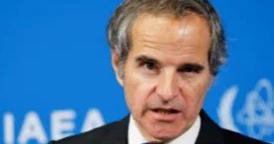
The head of the UN’s nuclear watchdog has warned that Iran retains the capability to restart uranium enrichment within "a matter of months," casting doubt on US claims that recent strikes on Iranian nuclear sites significantly disrupted Tehran’s nuclear ambitions.
In an interview with CBS’s Face the Nation, Rafael Grossi, Director General of the International Atomic Energy Agency (IAEA), said while US airstrikes had caused “severe damage” to Iran’s nuclear infrastructure, the attacks did not achieve “total damage” and Iran’s industrial and technological capacities remain largely intact.
Iran Retains Capability to Rebuild
Grossi’s comments offer a stark contrast to former US President Donald Trump’s repeated claims that the strikes “completely and totally obliterated” Iran’s nuclear program.
According to Grossi, Iran could resume enrichment operations quickly, deploying centrifuge cascades and beginning uranium production in less than a few months if it chooses to do so.
“It is clear that there has been severe damage, but it’s not total damage,” Grossi said. “If they so wish, they will be able to start doing this again.”
His remarks align with an early assessment from the Pentagon’s Defense Intelligence Agency, first reported by CNN, which suggested that while the US military targeted three key Iranian nuclear sites, core components of the program were likely preserved or moved before the strikes.
Questions Linger Over Undisclosed Materials
Grossi also voiced frustration over Iran’s long-standing failure to clarify the presence of uranium traces at undeclared sites, saying the IAEA had not received credible answers despite years of inquiries.
“We had found traces of uranium in some places in Iran, which were not the normal declared facilities,” Grossi said. “We were simply not getting credible answers.”
Although the IAEA had maintained effective oversight of declared nuclear activities prior to the conflict, concerns lingered over the full extent of Iran’s nuclear ambitions. Grossi clarified that his agency had not seen evidence of a current nuclear weapons program but warned that certain crucial questions remain unresolved.
Fallout from US and Israeli Strikes
The US strikes came in response to an escalation in the region following an unprecedented Israeli attack aimed at disrupting Iran’s nuclear progress. The 12-day conflict prompted swift US military action, but debate has persisted over the efficacy of those strikes.
While Republican lawmakers acknowledged the strikes may not have eliminated all of Iran’s nuclear materials, they argued that such a goal was never the military’s primary objective.
Recent satellite imagery confirmed damage to facilities such as Iran’s Fordow enrichment site, but there is growing speculation that Tehran may have preemptively moved enriched uranium to undisclosed locations before the attacks—a claim dismissed by Trump but considered “logical” by Grossi.
Iran Threatens Withdrawal from Oversight
In a troubling development, Iran’s parliament has passed legislation to halt cooperation with the IAEA, and Foreign Minister Abbas Araghchi has signalled that Tehran may consider exiting the Nuclear Non-Proliferation Treaty (NPT)—a cornerstone of international arms control.
Grossi underscored the importance of continued IAEA access, warning that any reduction in transparency would significantly raise global concerns. “This hourglass approach in weapons of mass destruction is not a good idea,” he cautioned.
As the situation remains volatile, the international community watches closely to see whether Iran will rebuild its enrichment programme—and whether diplomatic efforts can prevent a deeper nuclear crisis.
Source: With inputs from CNN