
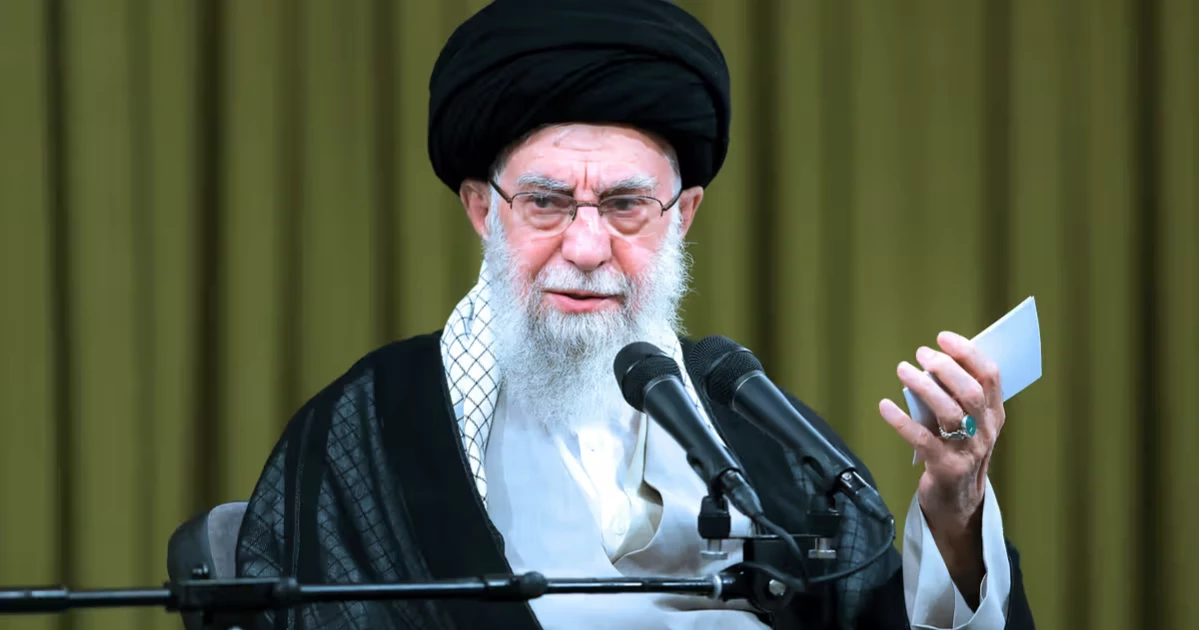
Iran’s judiciary chief on Wednesday indicated that fast-track trials and executions could soon be carried out against people detained in nationwide protests, defying warnings from US President Donald Trump.
Gholamhossein Mohseni-Ejei, head of Iran’s judiciary, made the remarks as rights activists warned that hangings of detainees could begin soon. A violent crackdown by security forces has already left at least 2,571 people dead, according to the US-based Human Rights Activists News Agency, marking one of the bloodiest episodes of unrest in Iran in decades.
Trump has repeatedly warned that Washington could take military action over the killing of protesters, only months after US strikes on Iranian nuclear sites during a brief war launched by Israel in June.
On Wednesday, Iranian authorities held a mass funeral for around 100 members of the security forces killed during the unrest, although officials had earlier put the figure at 300. Tens of thousands of mourners attended, waving Iranian flags and holding portraits of Supreme Leader Ayatollah Ali Khamenei. Coffins draped in national flags were stacked in rows and decorated with flowers and photographs of the dead.
Despite a heavy security presence easing in some areas, fear remains widespread. Plainclothes security personnel were still seen patrolling neighbourhoods, while riot police and members of the Basij paramilitary force appeared to have returned to their barracks.
A mother of two, speaking anonymously for fear of reprisals, said she was terrified by the gunfire and violence. “We hear many have been killed and injured. Now they say calm has returned, but schools are closed and I’m afraid to send my children back,” she said.
Ahmadreza Tavakoli, 36, told the Associated Press he witnessed one protest in Tehran and was shocked by the use of live ammunition. “People went out to protest peacefully, but it quickly turned into a war zone,” he said. “The people have no guns. Only the security forces do.”
In a video aired by state television, Mohseni-Ejei said any action against detainees must be carried out without delay.
“If we want to do something, we have to do it quickly. If it is delayed by months, it won’t have the same effect,” he said.
His comments directly challenged Trump, who warned in an interview with CBS that the US would take “very strong action” if Iran went ahead with executions.
“We don’t want to see thousands of people killed and then hear about hangings,” Trump said. “That’s not going to work out well for them.”
A Gulf Arab diplomat told AP that several Middle Eastern governments were urging the Trump administration not to go to war with Iran, warning of “unprecedented consequences” that could trigger a wider regional conflict.
Meanwhile, activists said Starlink had begun offering free satellite internet service in Iran, helping users bypass a nationwide internet shutdown imposed on January 8. Iran has since allowed outgoing international calls, but incoming calls remain blocked.
“We can confirm that free Starlink service is working inside Iran,” said Mehdi Yahyanejad, a US-based activist involved in bringing the terminals into the country.
Security forces were also reported to be searching for Starlink satellite dishes, with residents in northern Tehran saying authorities were raiding apartment buildings.
According to the Human Rights Activists News Agency, 2,403 of those killed were protesters, while 147 were government-affiliated. At least 12 children and nine civilians not involved in protests were also among the dead. More than 18,100 people have been detained.
Assessing the full scale of the unrest remains difficult as communications inside Iran continue to be heavily restricted.