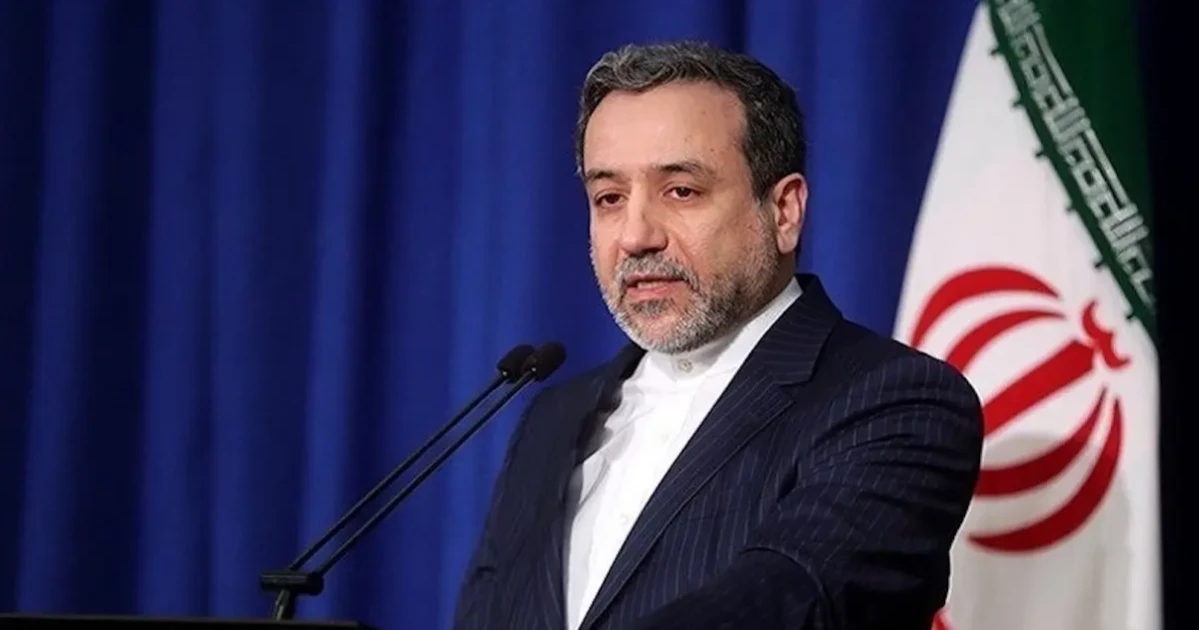
Iran 's foreign minister on Tuesday said that he'll meet with US envoy Steve Witkoff in Oman for the first negotiations under the Trump administration seeking to halt Tehran’s rapidly advancing nuclear program as tensions remain high in the Middle East.
Speaking to Iranian state television from Algeria, Abbas Araghchi maintained the talks would be indirect, likely with Omani mediators shuttling between the two parties. US President Donald Trump, in announcing the negotiations on Monday, described them as being direct talks.
Years of indirect talks under the Biden administration failed to reach any success, as Tehran now enriches uranium up to 60 per cent purity — a technical step away from weapons-grade levels.
Both the US and Israel have threatened Iran with military attack over the program, while officials in Tehran increasingly warn they could potentially pursue a nuclear bomb.
Macron urges Gaza ceasefire during Cairo visit
“Our main goal in the talks, is naturally restoring rights of people as well as lifting sanctions and if the other side has a real will, this is achievable, and it has no relation to the method, either direct or indirect," Araghchi said. “For the time being, indirect is our preference. And we have no plan to alter it to direct.”
Araghchi’s comments left space for Iran to potentially hold direct talks eventually with the Americans. Such talks aren’t known to have been held since the Obama administration.
There was no immediate acknowledgement from the US that Witkoff would lead the American delegation.
News of talks boosts Iran's ailing economy
After Trump's comments on the talks went public, Iran's ailing economy suddenly showed new signs of life. Its rial currency, which hit a record low of over 1 million rials to the dollar, rebounded Tuesday to 990,000 rials. The Tehran Stock Exchange separately rose some 2 per cent on the news.
Iran’s economy has been severely affected by international sanctions, particularly after Trump unilaterally withdrew America from Tehran’s nuclear deal with world powers in 2018. At the time of the 2015 deal, which saw Iran drastically limit its enrichment and stockpiling of uranium in exchange for lifting of international sanctions, the rial traded at 32,000 to the dollar.
Economic upheavals have evaporated the public’s savings, pushing average Iranians into holding onto hard currencies, gold, cars and other tangible wealth. Others pursue cryptocurrencies or fall into get-rich-quick schemes.