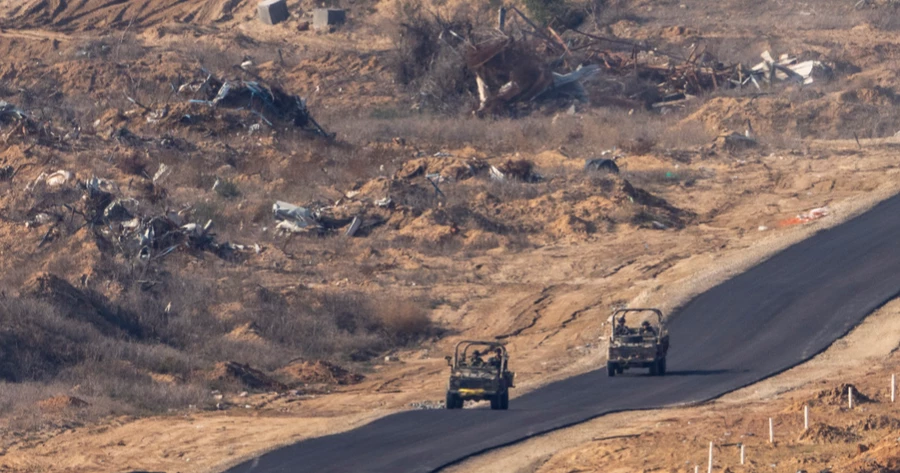
Israel has significantly increased its control over the Gaza Strip since resuming its conflict with Hamas last month. It now holds more than half of Gaza, pushing Palestinians into smaller areas of land.
The largest area under Israeli control is along the Gaza border, where the military has destroyed Palestinian homes, farmland, and infrastructure, rendering the region uninhabitable. This military buffer zone has doubled in size recently.
Israel describes this expansion as a temporary measure to pressure Hamas into releasing hostages taken during the October 7, 2023 attack that initiated the war. However, human rights organizations and Gaza experts argue that the area could be used for long-term control.
Prime Minister Benjamin Netanyahu stated last week that Israel would retain security control in Gaza even after Hamas is defeated and would encourage Palestinians to leave.
This systematic destruction near the Israeli border has been ongoing since the war began 18 months ago, according to testimonies from five Israeli soldiers. They shared with The Associated Press how the military razed everything, leaving Palestinians with nothing to return to.
Israel ‘deliberately targeting’ journalists in Gaza
A report released by Breaking The Silence, an anti-occupation veterans group, detailed how the military's actions in the buffer zone have laid the groundwork for Israeli control of the area. In response to the soldiers’ testimonies, the Israeli army emphasized that its operations are aimed at securing the country and improving security for communities affected by the October 7 attack.
In the early stages of the war, Israeli forces forcibly displaced Palestinians near the border, creating a buffer zone more than a kilometer deep. They also seized land in Gaza known as the Netzarim Corridor, isolating the north from the southern part of the territory.
Since the conflict resumed last month, the buffer zone has expanded, sometimes extending up to 3 kilometers into Gaza. This zone, along with the Netzarim Corridor, now constitutes at least 50% of Gaza, according to experts.
Netanyahu has suggested creating another corridor cutting through southern Gaza to isolate the city of Rafah. Israel’s control of Gaza also includes areas where civilians were recently ordered to evacuate before planned attacks.
Satellite images show neighborhoods that once housed hundreds of thousands of Palestinians, now reduced to rubble, with several new Israeli military outposts.
After the ceasefire in January, Palestinian Nidal Alzaanin returned to his home in Beit Hanoun, only to find it destroyed. His land now forms part of the buffer zone, and the war’s resumption forced him to leave again.
The destruction in the buffer zone has been methodical, with soldiers reporting the demolition of farmland, buildings, and industrial complexes. One soldier described the buffer zone as a "kill zone," with anyone entering the area shot at.
The long-term plans for the buffer zone remain unclear, though Netanyahu has said Israel intends to use it to pressure Hamas and push for the removal of Palestinians from Gaza. Rights organizations argue that such actions may amount to war crimes or ethnic cleansing. Israel rejects these accusations, claiming its actions aim to protect civilians.