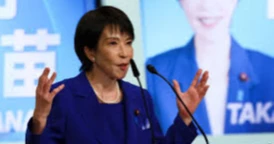
Japan’s ruling Liberal Democratic Party (LDP) has elected former Economic Security Minister Sanae Takaichi as its new leader, paving the way for her to become the country's first female prime minister.
Takaichi, known for her ultra-conservative views and strong stance against China, won the LDP leadership in a runoff vote on Saturday, defeating Agriculture Minister Shinjiro Koizumi, the son of former Prime Minister Junichiro Koizumi.
In a significant milestone for a nation that lags behind in gender equality, the 63-year-old becomes the first woman to lead Japan's long-dominant conservative party. A staunch supporter of former Prime Minister Shinzo Abe’s political ideology, Takaichi is also a regular visitor to the controversial Yasukuni Shrine, a move that could stir tensions with regional neighbors.
Following her victory, Takaichi acknowledged the historic nature of her win but stressed the challenges ahead. “I made history for the LDP,” she said. “Instead of celebrating, I’m focused on the many obstacles we must overcome. I’ll need everyone’s support.”
She vowed to revitalise the party and restore public confidence after a series of electoral defeats. “We must become a more dynamic and optimistic party to transform people’s concerns into hope,” she added.
The LDP, despite recent setbacks, still holds a dominant position in the lower house of parliament, making Takaichi the likely next prime minister. A formal parliamentary vote is expected by mid-October.
Takaichi replaces outgoing Prime Minister Shigeru Ishiba as the party seeks to recover from political setbacks and restore voter trust. The leadership transition comes at a crucial time as Japan faces both domestic and international challenges, including sluggish economic growth, security concerns, and political scandals.
Her appointment signals a shift towards more conservative policies, as the LDP looks to reclaim support from right-leaning voters who backed far-right parties like Sanseito in recent elections. Takaichi, however, presented herself as a “moderate conservative” during the campaign to appeal to broader audiences, including potential opposition allies.
While she supports increased government spending, a stronger defense posture, and tighter controls on foreign labor and tourism, she avoided taking hardline positions on divisive social issues during her campaign. Experts noted that LDP candidates largely steered clear of discussing controversial topics such as same-sex marriage, historical disputes, and recent political finance scandals — a move analysts say may undermine public trust.
The leadership race featured five candidates, including two sitting ministers and three former ones. While early polls identified Takaichi, Koizumi, and Cabinet Secretary Yoshimasa Hayashi as frontrunners, Koizumi would have become Japan’s youngest prime minister in over a century if elected.
The new leader will soon face her first diplomatic challenge, with a possible summit with U.S. President Donald Trump on the horizon. The meeting, expected in late October during the Asia-Pacific Economic Cooperation summit in South Korea, may include discussions on Japan’s defense spending — a key issue for both nations.
Takaichi’s victory also raises the possibility of expanding the ruling coalition, which currently includes the centrist Komeito party. Analysts suggest the LDP may seek cooperation with other centrist opposition groups to push forward its legislative agenda.