
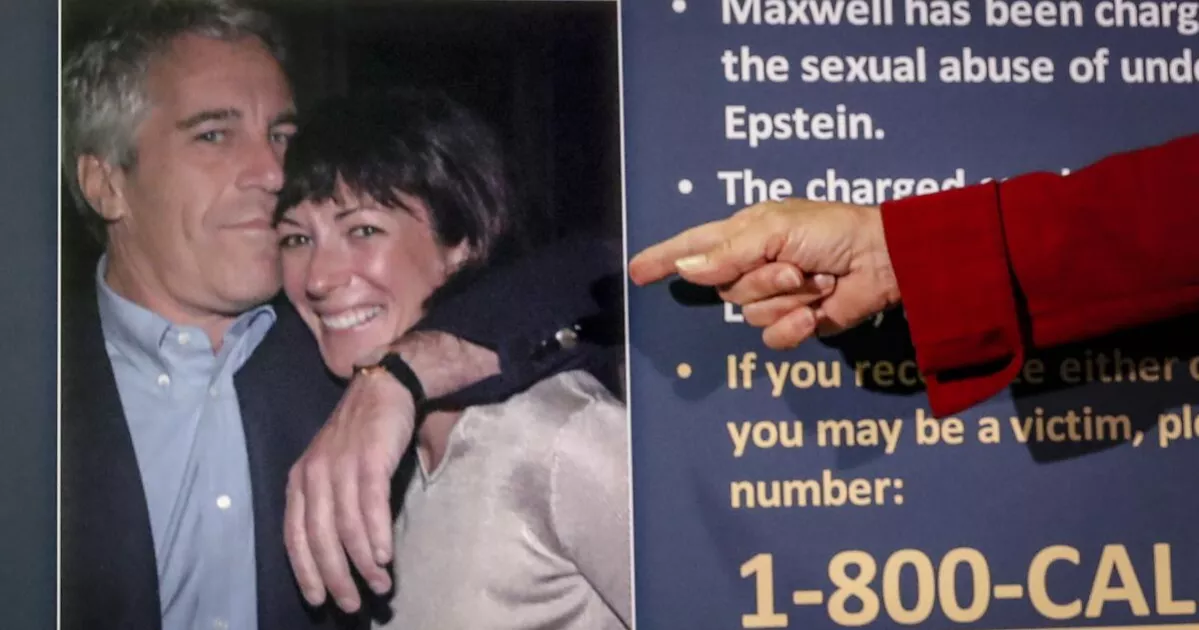
A federal judge has rejected the Justice Department’s request to release transcripts from the secret grand jury proceedings that led to Ghislaine Maxwell’s sex trafficking indictment, sharply criticizing the government’s push as an “illusion” of transparency.
In a written decision Monday, Judge Paul A. Engelmayer said federal law almost never permits the release of grand jury materials and that making them public without a compelling reason was a bad idea. After privately reviewing the documents, he concluded they offered nothing significantly new compared to evidence presented at Maxwell’s 2021 trial.
According to Engelmayer, the materials do not identify anyone besides Jeffrey Epstein and Maxwell as having sexual contact with minors, do not name any clients, and reveal no previously unknown methods, crime locations, or investigative details. They also contain no information about the source of Epstein’s wealth, the circumstances of his death, or the government’s investigative path.
The judge suggested the government’s real motive might have been to create the appearance of openness rather than provide meaningful transparency. “A member of the public… might conclude that the Government’s motion for their unsealing was aimed… at diversion — aimed not at full disclosure but at the illusion of such,” he wrote.
The Justice Department had sought to unseal the entire Maxwell grand jury record, with redactions for privacy, in part to quell ongoing public suspicion surrounding the Epstein case. Prosecutors acknowledged only two witnesses testified before the grand jury — an FBI agent and an NYPD detective — and said much of what was discussed has since become public through Maxwell’s trial, civil lawsuits, and victims’ statements.
Advocacy group files lawsuit against Justice Department and FBI seeking Epstein case records
Florida attorney Brad Edwards, representing nearly two dozen Epstein accusers, said he did not oppose the ruling, noting most victims wanted to protect their privacy and that the transcripts contained little evidentiary value. Maxwell’s lawyer declined comment, and the Justice Department did not respond to requests for comment.
The decision does not impact thousands of other pages the government holds but has declined to release, much of it sealed to protect victims. A separate federal judge is weighing whether to unseal grand jury transcripts from a 2005–2007 Florida investigation, but another judge there has already refused disclosure.
Maxwell, convicted in 2021 of aiding Epstein in sexually abusing underage girls, is appealing her conviction and has recently been moved from a Florida prison to a Texas prison camp. Her attorney says she testified truthfully in recent Justice Department interviews.
The case remains a flashpoint years after Epstein avoided federal charges in a controversial 2008 plea deal, later dying in jail in 2019 while awaiting trial. His death fueled conspiracy theories, amplified by former President Donald Trump and his allies, who accused authorities of covering up secrets to protect powerful people. While some Trump allies in the Justice Department once vowed to reveal more about the Epstein investigation, they announced this summer that no further disclosures would be made and that no “client list” exists — a reversal that intensified calls for transparency.
Trump has since urged Attorney General Pam Bondi to ask the courts to unseal the Maxwell grand jury transcripts, but Engelmayer’s ruling blocks that effort, at least for now.
Source: Agency