
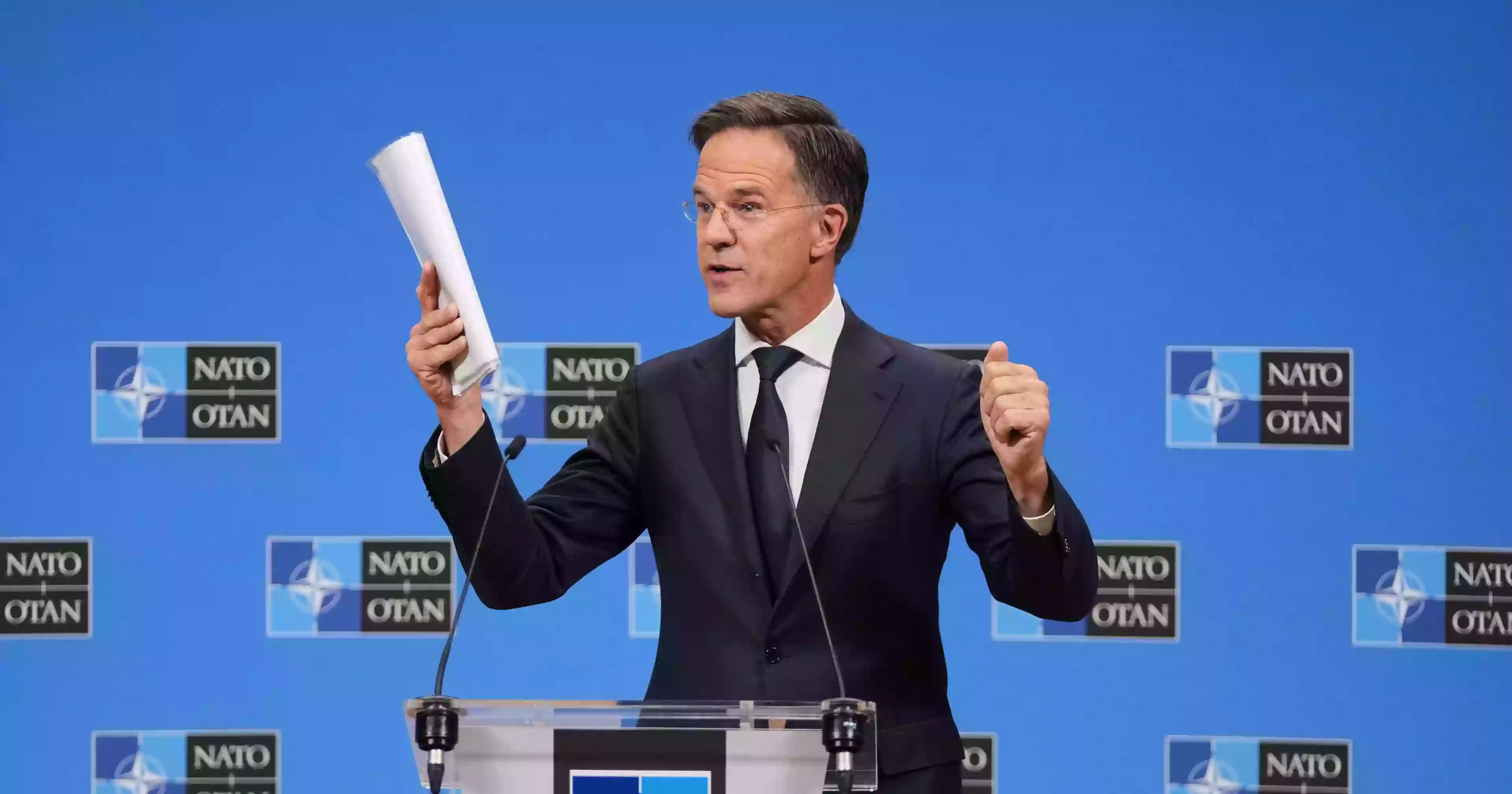
NATO will begin its annual nuclear exercise, Steadfast Noon, next week, with a key emphasis on safeguarding nuclear weapons before any potential use, Secretary-General Mark Rutte said Friday.
The long-scheduled two-week drill, starting Monday, comes amid heightened security across Europe following several unexplained drone incidents, some linked to Russia.
Led by the Netherlands, the exercise will involve 71 aircraft from 14 NATO member states, including bomber and fighter jets capable of carrying nuclear warheads — though no live weapons will be used. Most of the operations will take place over the North Sea, far from Russian or Ukrainian territory, with participation from bases in Belgium, Britain, Denmark, and the Netherlands.
Rutte said the exercise ensures NATO’s nuclear deterrence remains “credible, safe, secure, and effective,” while sending a clear signal that the alliance can defend all its members.
The U.S. and Britain, both nuclear powers, play central roles in NATO’s deterrence strategy, while France — though nuclear-armed — stays outside NATO’s nuclear planning group.
Officials declined to share details of the exercise scenarios but said the event is not targeted at any nation nor linked to current geopolitical tensions.
According to NATO’s Col. Daniel Bunch, Chief of Nuclear Operations, a major component of the drill will be securing nuclear assets on the ground. “These are highly protected assets that demand the highest level of safety and security,” he said.
Responding to questions about drones, Bunch noted that while such threats are not new, recent incursions are being closely monitored. “We’re going to stay one step ahead of any adversary,” he added.
The U.S. will contribute F-35 fighter jets, refueling aircraft, and support planes, while Finland and Poland are deploying fighters. Electronic warfare and intelligence systems will also be used.
NATO maintains that its nuclear capabilities exist solely to “preserve peace, prevent coercion, and deter aggression.” Officials reiterated that despite Moscow’s nuclear rhetoric, there has been no observable shift in Russia’s nuclear posture.
James Stokes, head of NATO’s Nuclear Policy Directorate, said the alliance continues to monitor Russian activities — including its use of dual-capable missiles in Ukraine — though the exercise is “not focused on Russia.”