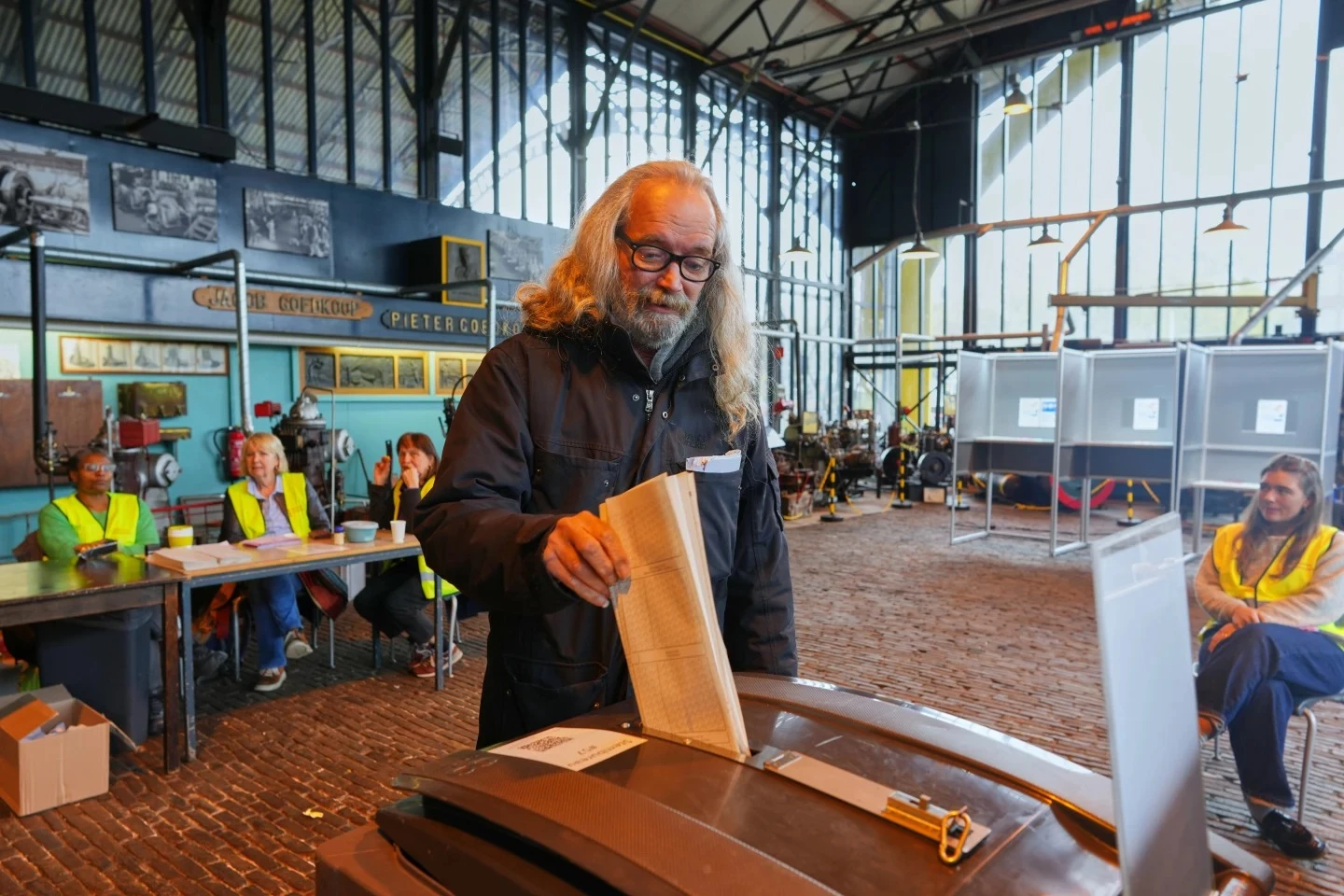
In a historic deadlock, anti-Islam lawmaker Geert Wilders’ far-right Party for Freedom (PVV) and the centrist D66 have finished neck and neck in the Dutch general election, with both parties securing 26 seats after 98 percent of votes were counted.
According to Dutch news agency ANP, the margin between the two leading parties was just over 2,000 votes nationwide — an unprecedented outcome in the Netherlands, where no previous election has ended in a tie for first place.
The photo-finish result is likely to delay coalition talks, as both parties claimed the right to lead negotiations for forming the next government.
Wilders’ PVV is projected to lose 11 seats in the 150-member House of Representatives, while D66, led by Rob Jetten, gained 11 seats — a record high for the centrist party.
“It’s neck and neck, just a few thousand votes,” D66 lawmaker Jan Paternotte told national broadcaster NOS. “I don’t think it has ever been this close before.”
Votes from nine municipalities — including three overseas — and postal ballots were yet to be tallied, NOS reported, leaving the final outcome pending.
Wilders insisted that his party should play a leading role in coalition formation if it ends up with the most seats. “As long as there’s no 100% clarity on this, no D66 scout can get started. We will do everything to prevent that,” he said.
Despite the uncertainty, D66 supporters celebrated what they called a “momentous result.” Jetten told party members, “Millions of Dutch citizens have chosen positive forces and a politics of unity.”
The snap election, triggered by Wilders in June after he collapsed the previous four-party coalition over migration disputes, saw his party’s support decline sharply after just 11 months in power.
Meanwhile, former European Commission vice president Frans Timmermans announced his retirement from Dutch politics after the center-left alliance of Labour and GreenLeft failed to meet expectations.
The election underscored deepening political polarization in the Netherlands, once known for its culture of tolerance and consensus.
Source: AP