
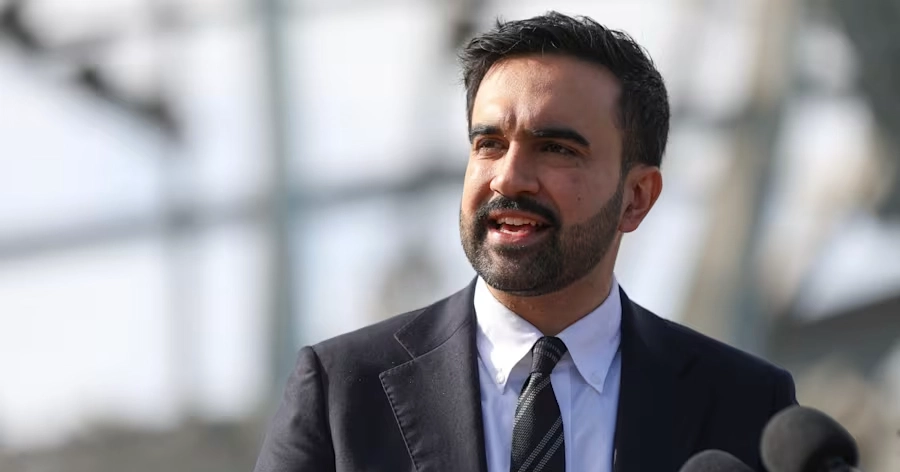
Zohran Mamdani, a 34-year-old democratic socialist set to take office as mayor of New York City on Jan 1, is facing intense scrutiny as questions mount over whether he can deliver on the sweeping promises that helped propel him into one of the most closely watched political jobs in the United States.
Even before assuming office, Mamdani has drawn criticism from Republicans, skepticism from centrist Democrats and close monitoring from progressives wary of any shift toward the political middle. As he prepares to lead the country’s largest city, expectations are high and tolerance for missteps is low.
Political analysts say Mamdani’s first months will be crucial. George Arzt, a veteran Democratic consultant in New York, said the mayor-elect must use his early days to show he can govern effectively.
“He’s got to use the first 100 days of the administration to show people he can govern,” Arzt said, adding that Mamdani’s inaugural address should clearly outline his agenda and how he plans to achieve it.
Mamdani campaigned on a platform focused on easing the cost of living for working-class New Yorkers, pledging policies such as free child care, fare-free city buses and a rent freeze for about 1 million rent-stabilized apartments. The agenda energized voters in one of the most expensive cities in the country and made him a prominent figure within a Democratic Party searching for new leadership during President Donald Trump’s second term.
However, analysts say governing New York brings relentless day-to-day pressures, from public safety and transit delays to sanitation and emergency response.
“He had a movement candidacy and that immediately raises expectations locally and nationally,” said Basil Smikle, a Democratic strategist and Columbia University professor. He said Mamdani may need to manage expectations while securing early, tangible wins.
A key challenge will be persuading skeptical New Yorkers that his policies are workable and beneficial. “It’s difficult to have this all happen on day one, or even day 100,” Smikle said.
Some of Mamdani’s proposals may find support at the state level. His plan for universal free child care has drawn backing from New York Governor Kathy Hochul, though funding details remain unclear. Hochul has opposed raising income taxes, which Mamdani favors for the wealthy, but has signaled openness to higher corporate taxes.
His rent freeze proposal, which does not require state approval, could face obstacles due to recent appointments made by outgoing Mayor Eric Adams to the city board that sets rent increases. Mamdani has said he remains confident the freeze can be implemented.
Other challenges loom, including strained relations with segments of the Jewish community over his criticism of Israel’s government and support for Palestinian rights. The Anti-Defamation League has said it will closely monitor his policies and appointments, citing concerns over antisemitism. Mamdani has rejected claims that criticism of Israeli policies equates to antisemitism.
Questions also remain over public safety, given Mamdani’s past calls to reduce police funding. His decision to keep current Police Commissioner Jessica Tisch has helped ease fears of abrupt changes within the nation’s largest police force.
Mamdani is also expected to navigate a complex relationship with President Donald Trump. While recent interactions have been less confrontational, analysts say sharp political differences, particularly on immigration, could fuel future clashes.
As Mamdani prepares to take office, supporters and critics alike are watching closely to see whether he can translate ambitious campaign promises into effective governance.