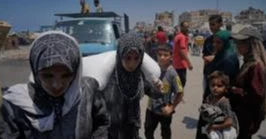
More than 100 humanitarian and rights organizations issued a warning Wednesday that Israel’s blockade and continued military actions are driving Gaza’s population toward starvation. The alert came as local health officials reported 29 more Palestinians killed in overnight Israeli airstrikes.
At the same time, U.S. Middle East envoy Steve Witkoff was scheduled to meet with a senior Israeli official to discuss ceasefire efforts, suggesting potential progress in long-stalled negotiations.
Experts say the risk of famine in Gaza is rising, a crisis triggered by Israel’s blockade and its military campaign launched in response to Hamas’ October 7, 2023, attack. The World Health Organization (WHO) has described a surge in malnutrition-related deaths and diseases, stating that a large portion of Gaza’s two million residents are now starving.
While Israel insists it has allowed sufficient aid into Gaza, it blames logistical issues on the U.N. and other delivery agencies. These groups counter that Israeli restrictions and dangerous conditions on the ground prevent effective aid distribution.
Hamas Conditions for Hostage Release
Hamas has stated that it will release the remaining 50 hostages—around 20 believed to still be alive—only in exchange for a permanent ceasefire and full Israeli military withdrawal. Israel has pledged to continue military operations until Hamas is dismantled and all captives are recovered.
Aid Groups Decry Conditions
In a joint open letter, 115 aid organizations—including Doctors Without Borders, Save the Children, and Mercy Corps—condemned Israel’s restrictions and accused its forces of targeting aid distribution sites.
The letter described the situation as “chaos, starvation, and death,” blaming Israel for both limiting humanitarian access and causing mass casualties. Witnesses, health officials, and the U.N. have accused Israeli troops of opening fire on civilians seeking aid, allegedly killing over 1,000 people. Israel disputes these claims, saying it uses warning shots and that casualty numbers are inflated.
WHO Director-General Tedros Adhanom Ghebreyesus echoed the concerns, saying treatment centers for malnutrition in Gaza are overwhelmed and undersupplied. He noted that over 10% of the population is acutely malnourished, with over 20% of pregnant and breastfeeding women suffering from serious nutritional deficiencies.
WHO officials also reported over 30,000 children under the age of five suffering from acute malnutrition in Gaza, with at least 21 confirmed child deaths this year alone due to hunger-related conditions.
Israel Pushes Back on Accusations
Israel’s Foreign Ministry rejected the letter’s claims, accusing the aid groups of spreading Hamas propaganda. It said approximately 4,500 aid trucks have entered Gaza since May, although U.N. data shows this averages only about 70 trucks per day—far short of the 500 to 600 trucks the U.N. says are needed daily.
U.N. agencies report that continued Israeli military restrictions, ongoing combat, and the collapse of civil order have severely hampered aid delivery. A separate system coordinated by Israel and a U.S. contractor has also been plagued by violence and mismanagement.
High-Level Talks on Ceasefire and Hostage Deal
White House Press Secretary Karoline Leavitt confirmed that Witkoff is traveling to Europe to meet Middle Eastern leaders and discuss a proposed ceasefire and potential hostage release.
An anonymous official confirmed that Ron Dermer, a senior adviser to Israeli Prime Minister Benjamin Netanyahu, will meet with Witkoff in Rome on Thursday. The developing plan reportedly includes a 60-day ceasefire, during which Hamas would release 10 surviving hostages and the remains of 18 others in stages, in exchange for Palestinian prisoners held in Israel. Humanitarian aid would also be significantly increased, and talks toward a permanent truce would follow.
Airstrikes Continue, Civilians Among the Dead
Despite diplomatic efforts, Israeli airstrikes continued overnight, reportedly killing at least 29 people. According to Gaza’s Health Ministry, a strike on a home in Gaza City killed 12, including six children and two women. The military said it had targeted an Islamic Jihad member and was reviewing the incident due to reports of civilian deaths.
Other strikes included one that killed three children in Gaza City, another in northern Gaza that killed six—three of them children—and an attack in the Nuseirat refugee camp that left eight dead and 57 injured.
The October 7 Hamas-led assault killed around 1,200 people, mostly civilians, and saw 251 hostages taken.
According to Gaza’s Health Ministry, over 59,000 Palestinians have been killed in the ongoing conflict. While the ministry does not separate civilian from militant deaths, it reports that more than half of those killed are women and children. The U.N. and humanitarian organizations consider the ministry’s figures the most reliable available.