
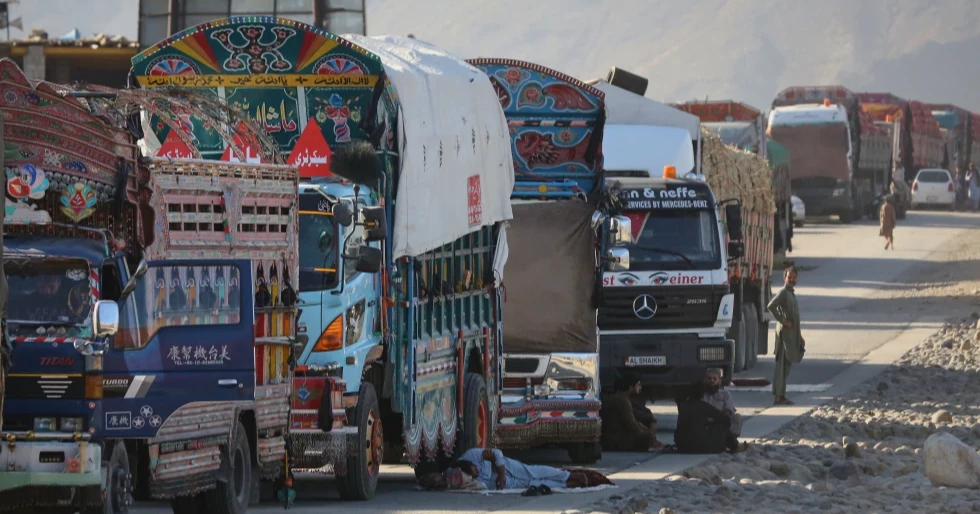
Pakistan on Saturday partially reopened the Torkham border crossing with Afghanistan to allow thousands of stranded Afghan refugees to return home, officials said, while restrictions on trade and other cross-border movement remain in place.
The border had been closed on Oct. 12 following deadly clashes in which both sides claimed to have killed dozens of troops. The closure left hundreds of trucks stranded and thousands of refugees stuck along the frontier, disrupting key trade routes between the two countries.
The partial reopening followed a ceasefire agreement reached between Pakistan and Afghanistan after nearly a week of talks mediated by Turkey and Qatar. Authorities said no new fighting has been reported along the 2,611-kilometer (1,622-mile) Durand Line, which Afghanistan has never formally recognized.
Thousands of refugees were moved to temporary camps near the border, while others waited along the roadside. Afghan officials said the gate reopened exclusively for refugees on Saturday morning, with thousands expected to cross back home throughout the day, and urged other travelers to refrain from using the crossing until further notice.
A video released by Afghanistan’s Nangarhar province showed officials and soldiers welcoming returning refugees with flowers at the Torkham gate.
The reopening comes amid ongoing tensions over immigration, as Pakistan has been repatriating Afghans living illegally in the country, with over a million returned since 2023.
The border closure followed escalations in which Pakistan conducted airstrikes on Taliban hideouts in Afghanistan, killing dozens, while Afghan forces reportedly retaliated, killing dozens of Pakistani soldiers. Pakistan acknowledged losing 23 troops.
The violence prompted diplomatic mediation, with Qatar hosting initial talks and Istanbul facilitating further negotiations, resulting in the current ceasefire.
Pakistan has also faced a rise in militant attacks, primarily by the Pakistani Taliban (Tehrik-e-Taliban Pakistan), a group distinct from the Afghan Taliban but emboldened by the latter’s takeover of Kabul in 2021.