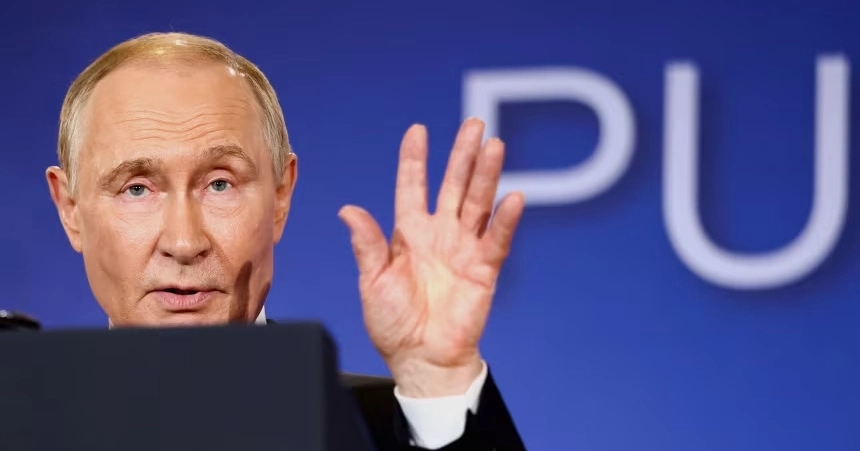
Russian President Vladimir Putin ended the Alaska summit with a rare show of his English-speaking ability, smiling as he told US President Donald Trump: “And next time in Moscow.”
The offhand remark, delivered without a translator, followed Trump’s comment that the two leaders would meet again soon. Putin also closed the summit by saying “thank you so much” in English, though the talks ended without an agreement on the war in Ukraine.
Although the Kremlin acknowledges that Putin speaks English well, the Russian leader usually relies on interpreters during formal diplomatic engagements. A former KGB officer, Putin is fluent in German, a language he often used with former German chancellor Angela Merkel.
Kremlin spokesman Dmitry Peskov has previously said Putin understands English almost completely and sometimes corrects interpreters. In May, when Putin spoke with Trump by phone, Peskov noted that the Russian leader could grasp what Trump was saying even before translation.
Trump leaves Alaska summit with Putin without a Ukraine peace deal
Still, Putin often avoids responding directly to uncomfortable English-language questions from the press, such as those about civilian casualties in Ukraine. He has also used his English more freely outside of negotiations, including delivering a two-minute statement in 2013 to promote Russia’s World Expo bid, and famously singing “Blueberry Hill” in 2010 at a St. Petersburg charity gala attended by Hollywood stars.
Earlier this year, he switched seamlessly into German during a video call with a man seeking Russian citizenship, reminiscing about his years in East Germany.
At Friday’s summit, Trump appeared intrigued by Putin’s parting invitation. “Ooh, that’s an interesting one,” he replied. “I don’t know, I’ll get a little heat on that one, but I could see it possibly happening. Thank you very much, Vladimir.”
Source: Agency