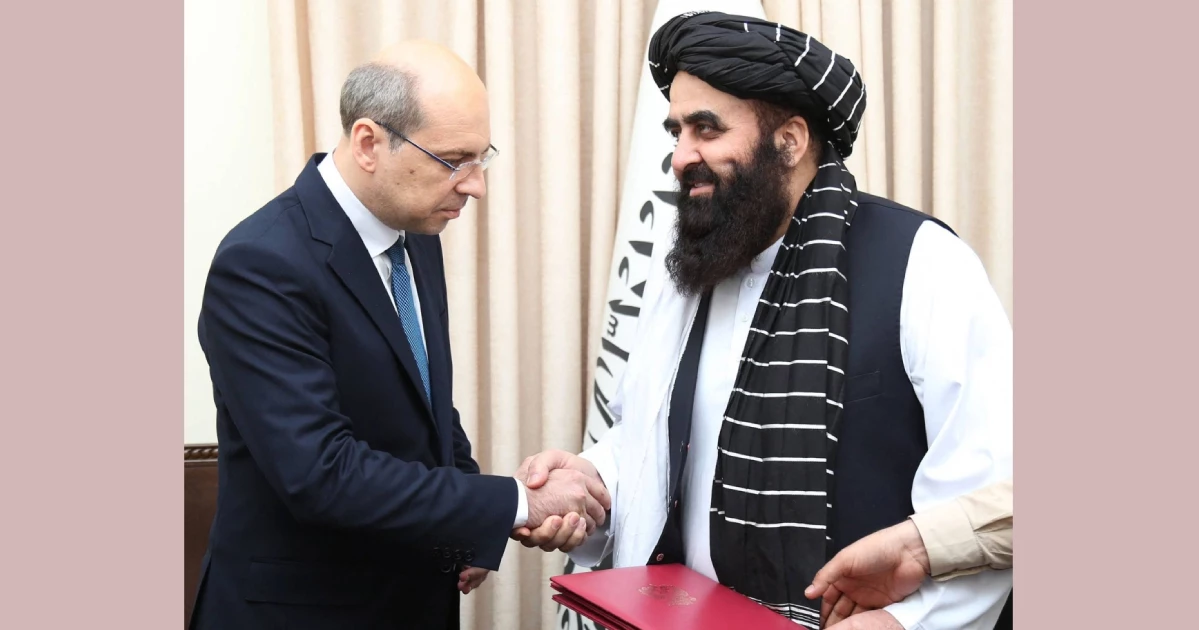
Russia has become the first nation to officially recognise the Taliban government in Afghanistan, drawing sharp criticism from opposition figures and rights activists.
The decisin marks a significant diplomatic breakthrough for the Taliban nearly four years after they seized control of Kabul and re-established their rule.
Afghanistan’s acting Foreign Minister Amir Khan Muttaqi expressed hope that Russia’s decision would encourage other nations to follow suit. So far, most countries have hesitated to recognise the Taliban administration due to its strict interpretation of Sharia law and severe restrictions on women and girls.
Critics, however, have strongly condemned Moscow’s recognition. Former Afghan politician Fawzia Koofi warned that normalising relations with the Taliban would not bring peace but rather embolden impunity. She further cautioned that such actions could endanger both Afghan citizens and global security.
The Afghan Women's Political Participation Network echoed these concerns, saying the recognition legitimises a "regime that is authoritarian, anti-women, and systematically dismantling basic civil rights."
The Taliban maintains that they respect women's rights within the framework of their interpretation of Afghan culture and Islamic law. However, since they regained power in 2021, girls above the age of 12 have been barred from receiving an education, and women have been excluded from many professions. Additional restrictions include limiting women’s ability to travel without a male guardian and bans on women raising their voices in public.
Russia launches largest air attack on Kyiv since war began
Muttaqi described Russia’s move, announced on Thursday, as the beginning of "a new phase of positive relations, mutual respect, and constructive engagement," calling the decision "courageous."
Russia’s Foreign Ministry, in a statement, highlighted prospects for expanded economic cooperation with Afghanistan in sectors such as energy, transportation, agriculture, and infrastructure. The ministry also pledged continued support to Kabul in fighting terrorism and drug trafficking.
Unlike many other countries, Russia kept its embassy in Kabul open after the Taliban took power in 2021, following the withdrawal of US and allied troops. In 2022, Russia also became the first country to sign a major economic agreement with the Taliban, involving the supply of oil, gas, and wheat to Afghanistan.
Earlier this year, in April, Russia removed the Taliban from its list of terrorist organisations, further paving the way for official engagement. Russian President Vladimir Putin had already referred to the Taliban as an "ally" in combating terrorism during remarks made in July last year.
The relationship between the two countries, however, remains complex. The Soviet Union, led by Russia, invaded Afghanistan in 1979, leading to a devastating nine-year conflict that resulted in the deaths of approximately 15,000 Soviet troops. The Soviet-backed government installed in Kabul faced international condemnation, eventually forcing a Soviet withdrawal in 1989.
In response to Russia’s latest decision, the Afghan Women's Political Participation Network recalled the Soviet invasion, saying they had not forgotten Russia’s role in Afghanistan’s destruction. The group accused Moscow of continuing its harmful interference under the guise of diplomacy.
Former Afghan National Security Adviser Dr Rangin Dadfar Spanta also criticised Russia's recognition, calling it "regrettable." He warned that in the absence of widespread opposition, other countries might follow Russia’s example.
Following the Taliban takeover in 2021, the United Nations imposed strict sanctions on Afghanistan, including the freezing of around $9 billion in assets. The UN has condemned the Taliban’s treatment of women, labelling the restrictions as "gender apartheid," while also reporting incidents of public floggings and brutal attacks on former government officials.
Despite widespread international refusal to recognise the Taliban, some countries have maintained or adjusted their relations. Germany, for example, is considering re-establishing deportations of convicted Afghan criminals. Although Germany halted deportations after the Taliban’s return to power, politician Alexander Dobrindt said Thursday that Berlin should negotiate directly with Afghan authorities to resume deportations.
However, the UN Human Rights Office warned on Friday that returning individuals to Afghanistan would be inappropriate, citing ongoing human rights violations under the Taliban regime.
While most countries shut their embassies in Kabul after 2021, a few—including China, the United Arab Emirates, Uzbekistan, and Pakistan—continue to maintain formal diplomatic representation by appointing ambassadors to Afghanistan.
#With Inputs from BBC