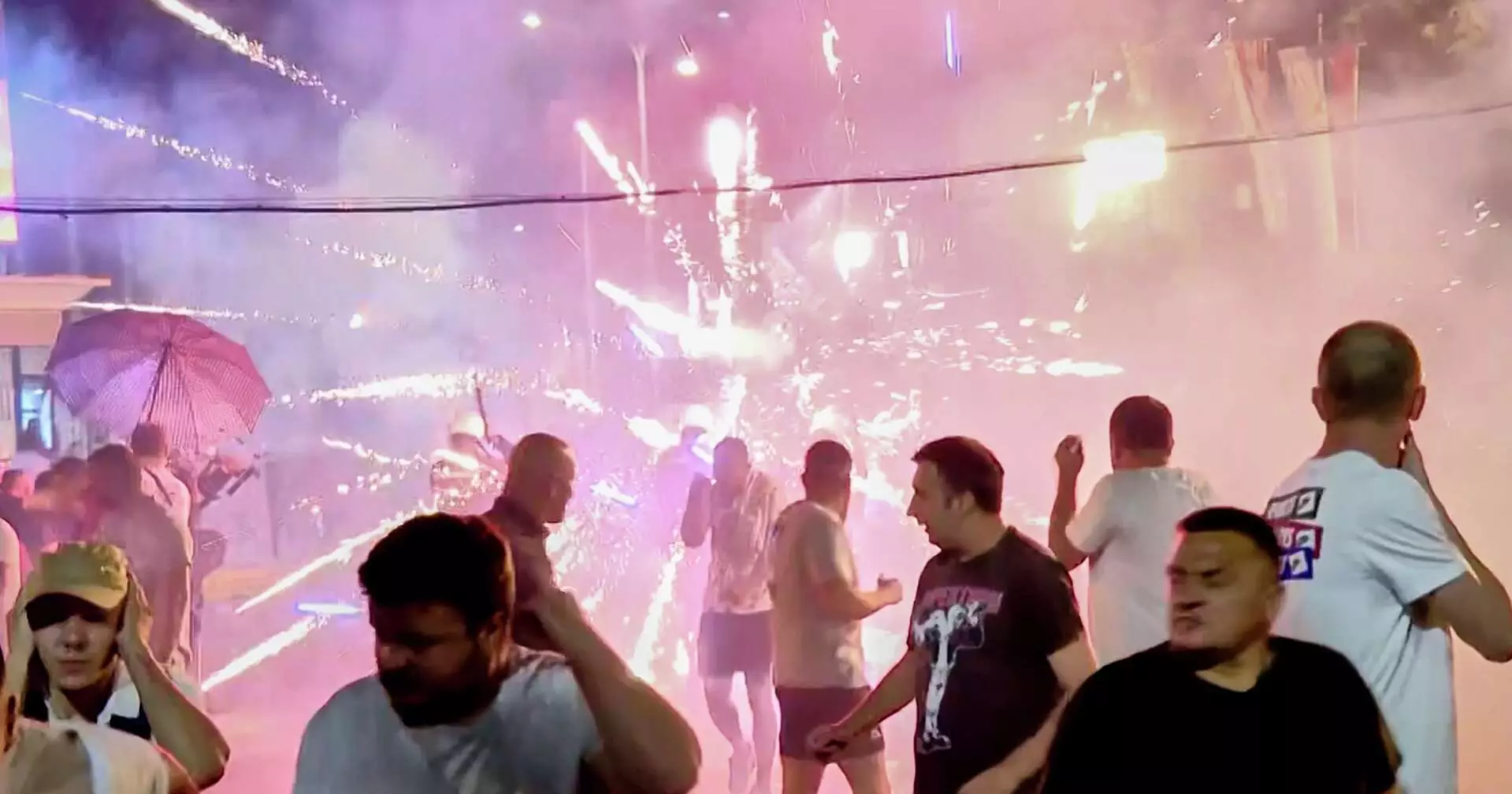
Clashes broke out in Serbia on Tuesday as government supporters and opponents confronted each other, escalating tensions after more than nine months of ongoing protests against populist President Aleksandar Vucic.
The incidents began in the town of Vrbas, northwest of the capital Belgrade, where riot police separated the two groups outside the offices of the ruling Serbian Progressive Party. Video footage from the scene showed government supporters throwing flares, rocks, and bottles at protesters, who retaliated with various objects. Police said dozens of people were injured, including 16 officers. Similar clashes were reported in other parts of the country.
The student-led protests in Serbia began in November after the collapse of a train station canopy in the northern city of Novi Sad killed 16 people, sparking allegations of corruption in state infrastructure projects. Since then, hundreds of thousands of people have joined the demonstrations, challenging Vucic’s firm grip on power. Recently, the president’s supporters have organized counter-demonstrations, raising fears of violence.
Serbian police detain 79 protesters as dissent persists against populist president
Police said several people were detained following the clashes in Vrbas. Police Commissioner Dragan Vasiljevic told state broadcaster RTS that the protesters “came to attack” supporters of the ruling party. Protesters, however, claimed government supporters initiated attacks in Vrbas and in other towns including Backa Palanka, Novi Sad, and the southern city of Nis. In Belgrade, riot police dispersed protesters gathered in a downtown area.
Protests in Serbia have largely remained peaceful since November. Led by university students, demonstrators are demanding that Vucic call an early parliamentary election, which he has refused. They have also called for the resignation of Interior Minister Ivica Dacic following recent clashes at demonstrations.
Serbia is formally seeking European Union membership, but Vucic has maintained strong ties with Russia and China. He has faced accusations of stifling democratic freedoms since coming to power 13 years ago.
Source: Agency