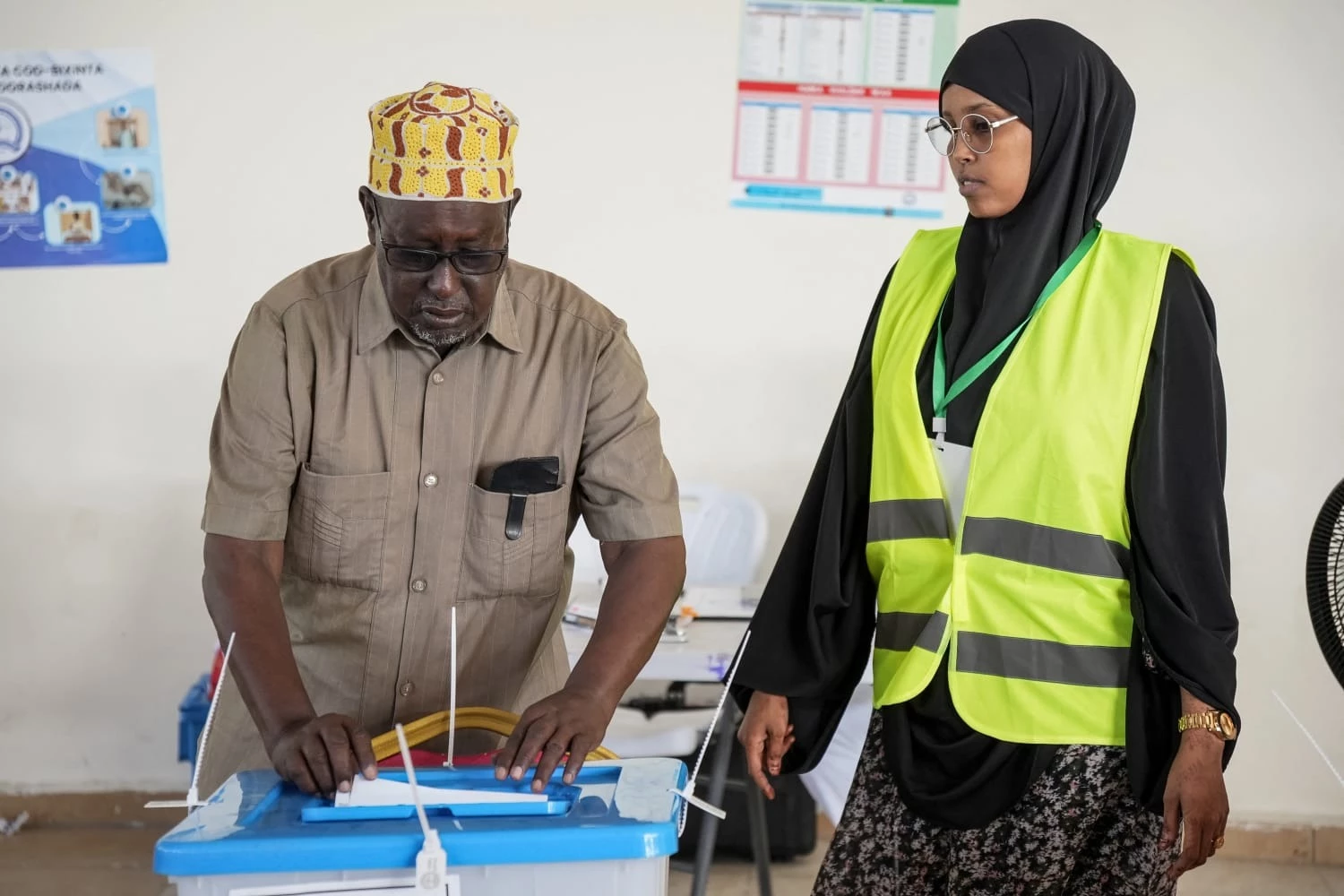
Somalia’s capital Mogadishu held a historic local election Thursday, marking the country’s first one-person, one-vote poll since 1969, breaking from decades of clan-based selection of officials.
The vote, for local council members across 16 districts, was organized by the federal government but rejected by opposition parties, who labeled it flawed and biased.
The election was overseen by Somalia’s National Independent Electoral and Boundaries Commission, with around 20 political parties fielding candidates. It did not include the mayoral post, which also serves as governor of Banadir region, as the city’s constitutional status remains unresolved amid disputes between the federal government and the Jubaland and Puntland states.
Over 900,000 voters were registered across 523 polling stations, with security heightened due to threats from the al-Qaeda-linked al-Shabab militant group. Analysts called the election a significant step toward reducing the dominance of clan-based power-sharing, strengthening citizen participation, and promoting government accountability.
Mohamed Husein Gaas of the Raad Peace Research Institute said the process demonstrated that local elections are feasible in Somalia and could pave the way for phased implementation at federal and national levels. Opposition leaders, however, warned that bypassing negotiated clan arrangements could destabilize Somalia’s fragile federal system.