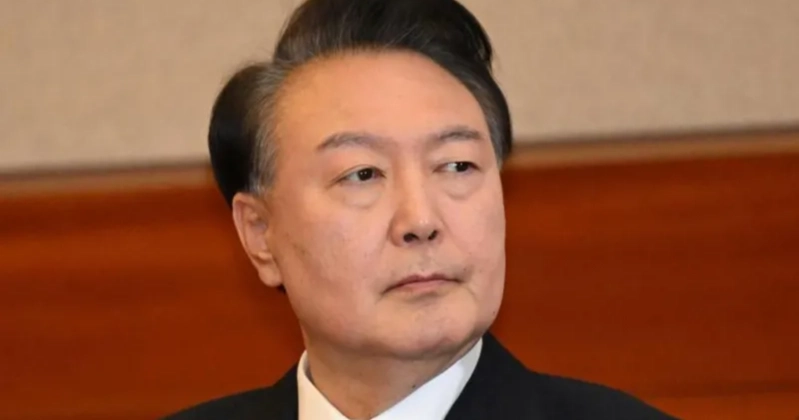
South Korea’s former president Yoon Suk Yeol has been sentenced to life imprisonment for orchestrating an insurrection through an attempted imposition of martial law, a Seoul court ruled on Thursday.
The court found that Yoon sought to undermine the constitution by deploying troops to block the National Assembly and ordering the arrest of politicians on December 3, 2024. Presiding judge Ji Gwi-yeon said the former leader’s actions gravely damaged South Korea’s democratic foundations and warranted the heaviest possible punishment short of execution.
Prosecutors had demanded the death penalty. South Korea, however, has not carried out executions since 1997, meaning a death sentence would effectively amount to life imprisonment.
The brief but dramatic martial law order deepened political polarisation across the country, tensions that were clearly visible during the sentencing. Large crowds of Yoon’s supporters gathered outside the courthouse ahead of the verdict, some chanting slogans in his favour and later breaking down in tears. At the same time, anti-Yoon protesters called for capital punishment.
Yoon showed no visible reaction as the verdict was delivered. His legal team rejected the ruling, arguing it lacked evidentiary basis and accusing the court of following a predetermined outcome. If either side appeals, the case will move to the Supreme Court, potentially delaying a final decision for months.
Yoon stunned the nation when he announced martial law in a live television address in December 2024, claiming it was necessary to counter “anti-state” forces sympathetic to North Korea. Investigators later concluded the move was driven largely by domestic political pressure, as the opposition-controlled parliament had rendered him a lame-duck president and his wife, Kim Keon Hee, faced corruption allegations.
Lawmakers forced their way into the National Assembly within hours to overturn the order, prompting its swift withdrawal. The episode triggered months of political turmoil, Yoon’s impeachment, and a series of criminal cases against him and senior officials.
Former prime minister Han Duck-soo was sentenced last month to 23 years in prison for his role in the plot, while ex-defence minister Kim Yong-hyun, who advised Yoon on the martial law move, received a 30-year sentence. Several other former ministers, intelligence officials and police chiefs have also been jailed in what judges described as an “insurrection from the top”.
Security around the court was tight, with around 1,000 police officers deployed and buses forming barricades to control access.
Although the court labelled Yoon the leader of the insurrection, judges said there was insufficient evidence to prove he had planned the martial law move a full year in advance. Throughout the trial, Yoon maintained that he had constitutional authority as president to declare martial law and insisted the move was aimed at safeguarding national sovereignty and constitutional order.
The ruling Democratic Party, which returned to power after Yoon’s removal, criticised the court for stopping short of imposing the death penalty, arguing the verdict fell short of public expectations.
Yoon is already serving prison terms for abuse of power and obstruction related to the same events and still faces three additional trials. While several former South Korean presidents have previously been jailed only to receive pardons after a few years, it remains uncertain whether similar clemency would be extended in this case.
With inputs from BBC