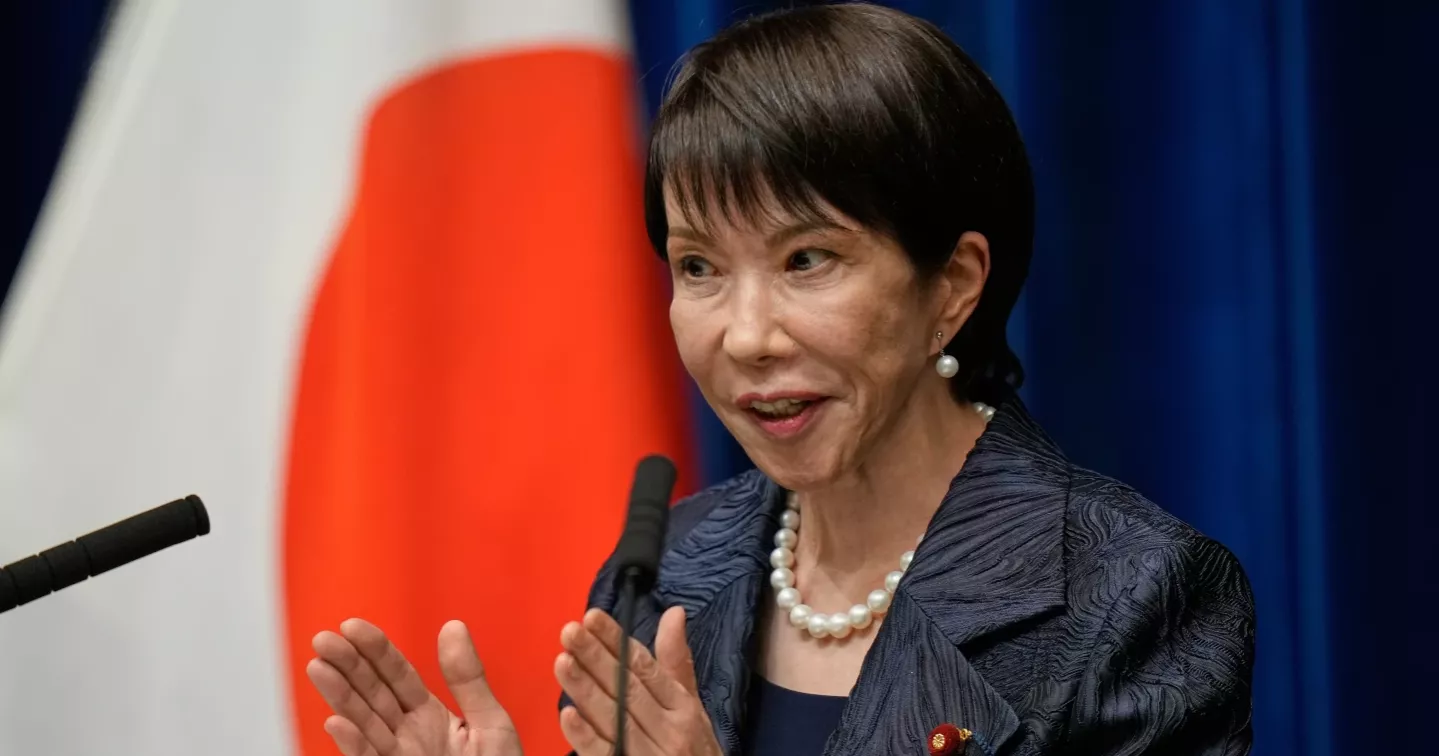
South Korean President Lee Jae Myung and Japan’s new Prime Minister Sanae Takaichi on Thursday pledged to deepen bilateral relations despite lingering tensions rooted in their wartime history, as both countries navigate global uncertainty and pressure from the United States.
The meeting, held in the southeastern city of Gyeongju, marked their first summit and came ahead of the Asia-Pacific Economic Cooperation (APEC) summit. It followed visits by U.S. President Donald Trump to both Tokyo and Seoul, where he urged the two key American allies to fulfill their multibillion-dollar investment commitments in the United States.
President Lee said South Korea and Japan face “rapidly changing international dynamics and trade conditions,” stressing that forward-looking cooperation between the two nations is more vital than ever.
Prime Minister Takaichi, for her part, emphasized the importance of trilateral cooperation among Seoul, Tokyo, and Washington “under the current strategic environment,” according to a statement from the South Korean presidential office.
Both leaders agreed to continue their “shuttle diplomacy,” taking turns to host future summits. “Our talks were very enjoyable and meaningful,” Takaichi said, adding that she looked forward to hosting Lee in Japan next time.
Takaichi’s election on October 22 had raised concerns in Seoul due to her right-leaning stance on historical issues. She has previously resisted acknowledging Japan’s wartime aggression and denied coercion in the use of Korean laborers and women forced into sexual slavery during World War II.
Despite these concerns, analysts believe Seoul and Tokyo are likely to continue strengthening cooperation, as both seek to safeguard their economic interests amid Trump’s push to overhaul global trade rules. The two countries also share other pressing challenges, including supply chain vulnerabilities and North Korea’s nuclear ambitions.
President Lee’s rise to power in June initially sparked apprehension in Japan, given his past criticism for leaning toward North Korea and China. However, under his policy of “pragmatic diplomacy,” Lee has repeatedly vowed to reinforce ties with Japan and the U.S., prioritizing trilateral security collaboration.
Both governments have also pledged massive investment packages in the United States. Seoul had been negotiating for weeks with Washington over the structure of its proposed $350 billion investment plan. Following Lee’s summit with Trump on Wednesday, South Korea announced it had made progress toward finalizing a trade deal.
According to South Korean officials, the country will provide $200 billion in direct U.S. investments over the next decade and another $150 billion — including loan guarantees — to help rejuvenate America’s shipbuilding industry. In exchange, Washington has agreed to reduce tariffs on Korean cars and auto parts from 25% to 15%, while also promising to share technology that would allow South Korea to develop nuclear-powered submarines.
Trump’s visit to South Korea, which included a separate summit with Chinese President Xi Jinping on Thursday, followed his trip to Japan earlier this week. In Tokyo, Trump and Takaichi unveiled several major U.S.-based energy and technology projects funded by Japan, with American officials estimating up to $490 billion in Japanese investments tied to the new trade deal.
As both Seoul and Tokyo work to balance their alliance with Washington and manage regional rivalries, Thursday’s summit reflected cautious optimism that pragmatic cooperation could prevail over historical grievances.