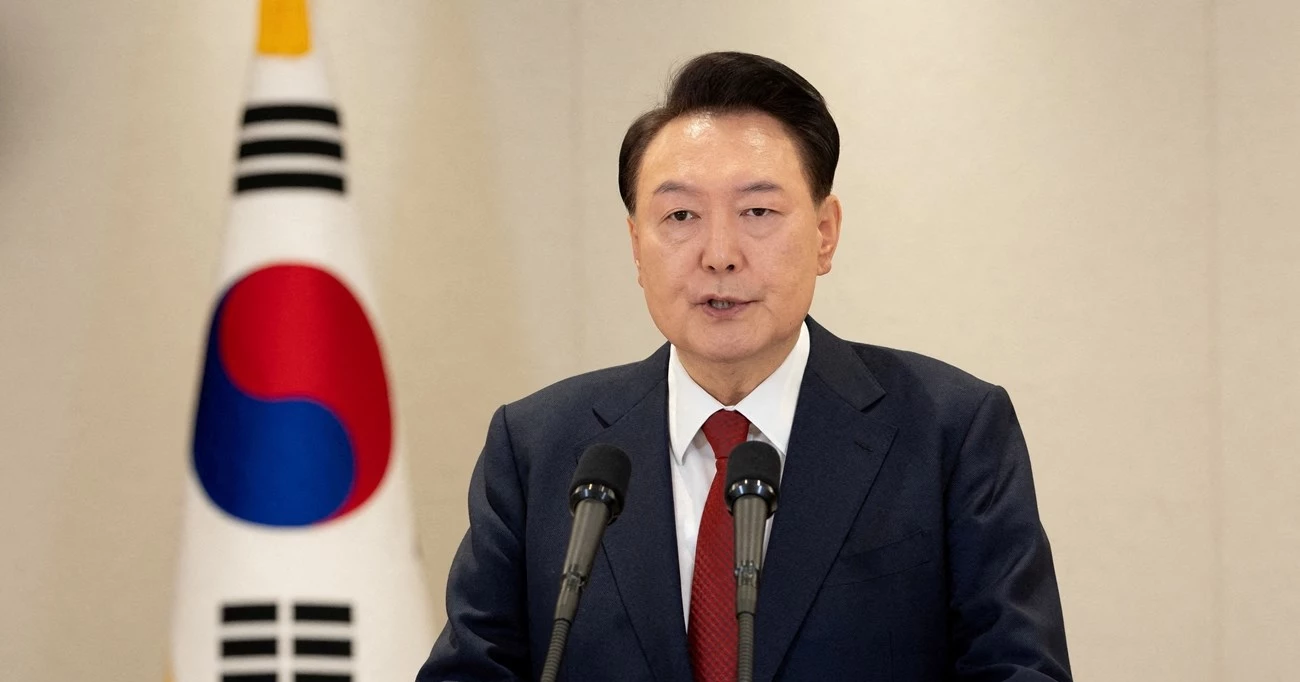
South Korean authorities arrested impeached President Yoon Suk Yeol on Wednesday, marking the first time in the nation’s history that a sitting president has been detained. Yoon faces insurrection charges related to his brief declaration of martial law on December 3, which led to political chaos and an unprecedented crisis in one of Asia's most vibrant democracies.
Reports indicate that Yoon, who had been holed up in his heavily fortified hillside residence in central Seoul for weeks, left his home in a convoy bound for the offices of the Corruption Investigation Office (CIO) after a joint operation by investigators and police executed the arrest warrant. He had previously resisted efforts to detain him, citing legal challenges and fears of public humiliation.
Yoon’s lawyer, Seok Dong-hyeon, announced that the president had agreed to cooperate with investigators, stating on Facebook, “President Yoon has decided to personally appear at the Corruption Investigation Office today to prevent a serious incident.” Yoon also confirmed he would deliver a speech as part of his voluntary appearance.
More than 3,000 police officers and anti-corruption investigators gathered at his residence before dawn, clashing with supporters and members of Yoon's ruling People Power Party who staged protests against the arrest. Investigators finally confirmed the arrest of the suspended president at 10:33 AM local time.
Following the arrest, Yoon can be held for up to 48 hours under the existing warrant. However, authorities would need to seek a further warrant to extend his detention. This marks the second attempt to arrest Yoon. A previous attempt on January 3 had failed after a tense standoff with members of the Presidential Security Service (PSS), who blocked the investigators from carrying out the warrant.
Yoon's declaration of martial law in December triggered widespread protests and political turmoil, prompting South Korea’s lawmakers to vote for his impeachment on December 14. The impeachment removed him from office, but the Constitutional Court is still deliberating whether to uphold the decision and permanently remove him from power.
Separately, Yoon's impeachment trial began on Tuesday, but the proceedings were adjourned after his failure to attend. His legal team blamed purported safety concerns for his absence, but the hearings will continue without him, with the next session scheduled for Thursday.
As South Koreans await further developments, the nation is left grappling with the fallout from an unprecedented political crisis and the potential ramifications of the first-ever presidential arrest in the country’s history.