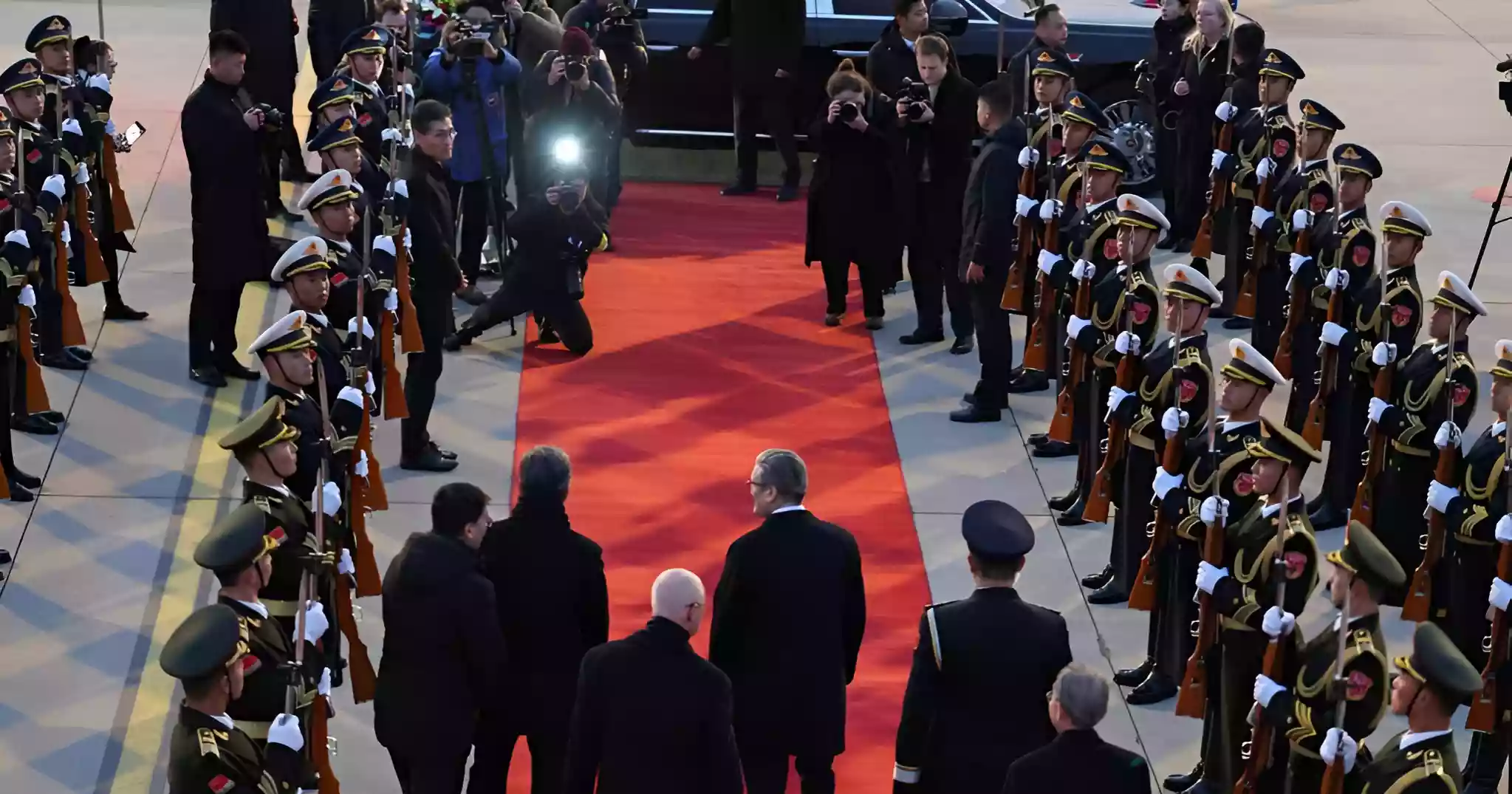
UK Prime Minister Keir Starmer arrived in Beijing on Tuesday for a three-day visit aimed at strengthening trade and investment ties, marking the first visit by a British premier to China since 2018.
Accompanied by around 60 business and cultural leaders, Starmer is scheduled to meet Chinese President Xi Jinping and Premier Li Qiang, as well as engage with officials in Shanghai on commercial and investment opportunities. The trip will conclude with a visit to Japan to meet Prime Minister Sanae Takaichi.
Speaking on the flight to Beijing, Starmer said the trip would deliver benefits “back at home” and stressed the need for a “comprehensive and consistent approach to China.” On human rights concerns, he said issues would be raised where necessary but declined to provide specifics.
Starmer’s visit comes amid heightened trade tensions between China and the United States, with Washington having threatened punitive tariffs on countries pursuing new trade agreements with Beijing. The prime minister stressed that the UK would maintain close relations with the US while also engaging with China, saying it would be “unwise” to ignore the Asian giant.
Security remains a priority for the UK delegation. Members are using disposable phones and temporary email addresses, leaving modern devices behind due to concerns about surveillance, while officials emphasize vigilance regarding potential risks from China.
Economically, the UK and China remain heavily imbalanced, with China’s $20 trillion economy far outstripping the UK’s $4 trillion GDP. However, UK exports to China rose 6.4% to £22.6 billion ($29.3 billion) between 2024 and 2025, with growth led by machinery, pharmaceuticals, and high-tech goods. Services, tourism, and finance sectors are also showing recovery, highlighting renewed opportunities for British businesses.
Observers say the trip carries both economic and symbolic significance. China sees the UK as a stable partner amid US policy unpredictability, while Starmer seeks to signal that Britain will engage pragmatically with global powers without compromising security or values.
The visit also follows recent trade agreements China struck with Canada, demonstrating Beijing’s interest in expanding partnerships with Western nations despite friction with Washington. Analysts note that while opportunities are significant, Starmer faces a delicate diplomatic balance between economic interests, human rights, and maintaining strong ties with the United States.
With inputs from BBC