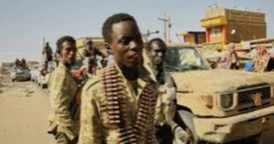
Sudan’s paramilitary Rapid Support Forces (RSF) and their allies have declared the formation of a separate government in territories they control, primarily in the Darfur region—an area already under scrutiny for alleged war crimes and crimes against humanity.
The announcement, made Saturday, is expected to intensify the country's ongoing conflict, which erupted in 2023 when tensions between Sudan’s military and the RSF broke out into full-scale fighting in Khartoum and across the country.
The new administration, formed by the RSF-led Tasis Alliance, has appointed RSF leader Gen. Mohamed Hamdan Dagalo as head of a 15-member sovereign council, effectively making him the leader of the breakaway state.
The RSF evolved from the Janjaweed militias, which were mobilized in the early 2000s by then-President Omar al-Bashir to suppress ethnic groups in Darfur. These militias were accused of committing mass atrocities including killings and sexual violence.
In the current conflict, the RSF has been blamed for widespread abuses. The U.S. government has sanctioned Dagalo, accusing the RSF and its affiliates of carrying out acts of genocide—allegations the RSF denies.
The announcement came via a video statement from Nyala, a city in Darfur under RSF control, delivered by alliance spokesperson Alaa al-Din Naqd.
In the newly declared government, Mohammed Hassan al-Taishi—a former member of Sudan’s post-2019 transitional council—is named prime minister. Rebel leader Abdelaziz al-Hilu, who heads the Sudan People’s Liberation Movement-North (SPLM-N), was appointed as Dagalo’s deputy. The SPLM-N is active in the southern Kordofan region and split from the ruling party of South Sudan.
This development follows the February signing of a charter in Nairobi, Kenya, by the RSF and its allies, outlining their intent to establish a parallel government in areas under their control. That move was widely condemned by the international community, including the United States, which rejected the RSF’s so-called “transitional constitution.”
Sudan’s internationally recognized government in Khartoum denounced the RSF announcement, calling it a “fake government” and urging global actors not to recognize or engage with the RSF-led administration.
Political figures, including rebel leader Yasir Arman, warned that the creation of rival governments could further fragment Sudan, drawing parallels to the division in neighboring Libya.