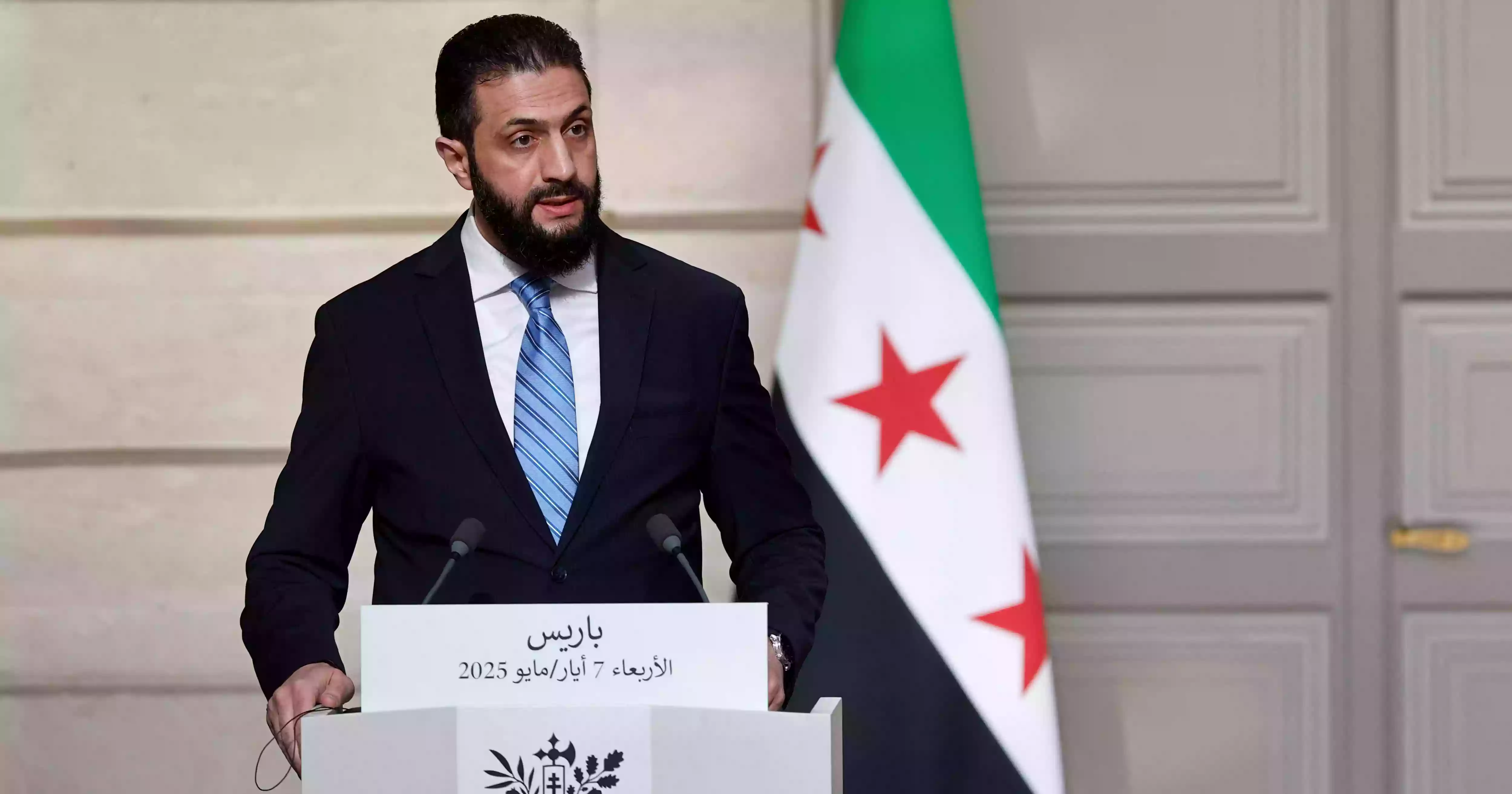
Syrian President Ahmad al-Sharaa arrived in New York on Sunday to attend the United Nations General Assembly, becoming the first Syrian head of state to do so in nearly 60 years.
The last Syrian leader to appear at the General Assembly was in 1967, years before the Assad family’s five-decade rule. That era ended in December when then-President Bashar Assad was ousted in a lightning insurgent offensive led by al-Sharaa, bringing to a close nearly 14 years of civil war.
Since taking power, al-Sharaa has moved to mend ties with Arab nations and Western governments, which were initially cautious due to his past leadership of Hayat Tahrir al-Sham, a group once designated as a terrorist organization by the United States. He has since adopted a platform of coexistence and pledged to protect minority communities, though outbreaks of sectarian violence and reports of killings of Druze and Alawite civilians by fighters loyal to the new government have cast a shadow over Syria’s fragile recovery.
Israeli drones strike Damascus suburb, killing eight Syrian soldiers: officials
Al-Sharaa is expected to use his New York trip to seek further sanctions relief as Syria struggles to rebuild its war-ravaged economy and infrastructure. U.S. President Donald Trump met him in Saudi Arabia in May and lifted decades of sanctions imposed under the Assad regime. However, the toughest restrictions remain under the 2019 Caesar Syria Civilian Protection Act, which only Congress can repeal.
Another pressing issue is Syria’s strained relations with Israel. Following Assad’s fall, Israel seized a former U.N.-patrolled buffer zone in southern Syria and has carried out repeated airstrikes on Syrian military positions. Talks are ongoing for a security deal that could revive the 1974 disengagement agreement, though Israeli Prime Minister Benjamin Netanyahu on Sunday said a breakthrough remains distant.
Turkey backs Syria’s new government, issues regional warning, signs defense deal
Meanwhile, Syrian officials announced that the first parliamentary elections since Assad’s ouster will be held on October 5. Under the system, electoral bodies in each province will choose two-thirds of the People’s Assembly seats, while al-Sharaa will directly appoint the remaining one-third. Authorities said direct nationwide voting is not feasible at this stage, given widespread displacement and the loss of personal documentation among millions of Syrians.
Source: Agency