
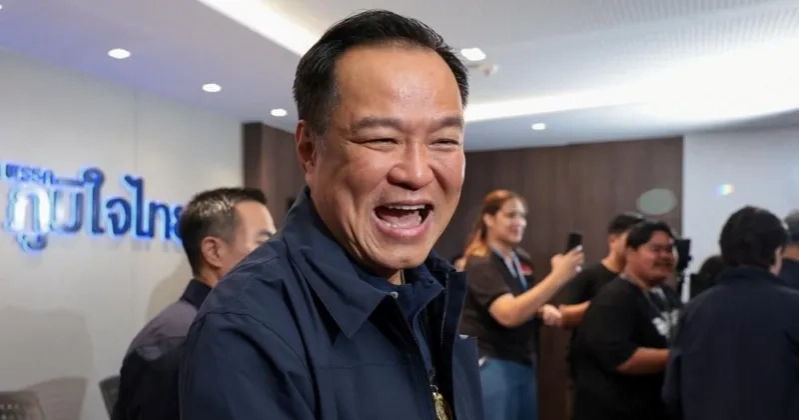
Thai Prime Minister Anutin Charnavirakul on Sunday declared victory in the country’s general election as preliminary results showed his conservative Bhumjaithai Party far ahead of its rivals.
With about 90 percent of votes counted, projections showed Bhumjaithai winning 194 seats in the 500 member House of Representatives. The reformist People’s Party was placed second with 116 seats, according to early tallies.
Anutin said the victory belonged to all citizens, regardless of whom they supported in the election. The outcome surprised many observers as opinion polls had earlier predicted a lead for the People’s Party.
People’s Party leader Natthaphong Ruengpanyawut appeared to concede defeat, saying he was prepared to sit in opposition if Anutin succeeded in forming a new government.
The snap election was called in December after Anutin’s previous coalition collapsed just three months into its term. No party is expected to secure an outright majority, but the strong showing has put Anutin in a commanding position to remain in office.
If confirmed, the result would mark a major gain for Bhumjaithai, which is projected to win more than twice the number of seats it secured in the 2023 election.
The outcome was a setback for the People’s Party, which had hoped to build on its strong performance three years ago when it won the most votes under its former name, Move Forward. That party was later blocked from forming a government by the unelected senate.
This time, the expected surge of support for its young reform minded candidates did not materialise. Analysts said the party struggled to match the local influence and nationwide networks built by Anutin’s conservatives.
Anutin’s campaign focused on nationalism, protection of traditional institutions such as the monarchy and military, and promises of financial support. His party also benefited from backing by local power brokers in an electoral system where most seats are decided in individual constituencies.
The Shinawatra family backed Pheu Thai Party emerged as the third largest force, projected to win 86 seats, a sharp fall from its performance in 2023. Its popularity has been hit by internal instability, court rulings against its leaders and criticism over its handling of tensions with Cambodia.
Economic concerns played a central role in the campaign, with voters worried about record household debt, weak growth and factories relocating to neighbouring countries.
Alongside the election, voters also took part in a referendum on reforming the 2017 constitution drafted under military rule. Early results suggested around two thirds of voters backed constitutional changes.
With inputs from BBC