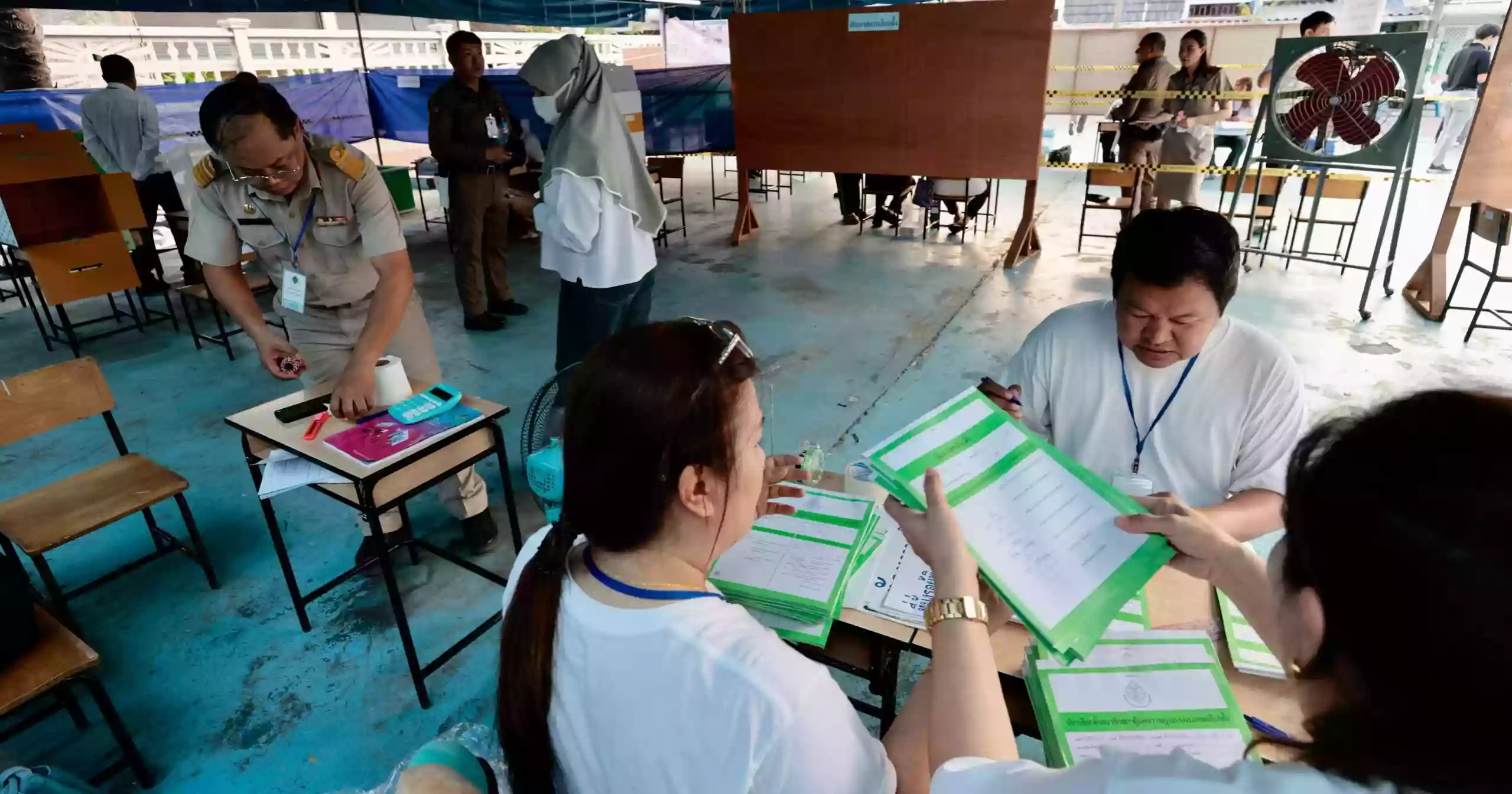
Thai voters went to the polls on Sunday in an early general election widely seen as a three-way contest among the progressive People’s Party, the ruling Bhumjaithai Party and the populist Pheu Thai Party.
More than 53 million voters are eligible to cast ballots in the election, held amid slow economic growth and rising nationalist sentiment. Although over 50 political parties are contesting the polls, analysts say only three have a real chance of forming the next government.
A simple majority in the 500-seat House of Representatives is needed to select the next prime minister. Opinion surveys suggest no party is likely to win an outright majority, making a coalition government almost certain.
The People’s Party, led by Natthaphong Ruengpanyawut, is expected to win the most seats but may struggle to form a government due to opposition from conservative parties. It is the successor to the dissolved Move Forward Party and continues to promote reforms of the military, police and judiciary, while placing more focus on economic issues.
The Bhumjaithai Party, headed by Prime Minister Anutin Charnvirakul, is seen as the favorite to lead the next government. Anutin called the snap election in December after facing a no-confidence threat. His campaign centers on national security and economic recovery.
The Pheu Thai Party, linked to former prime minister Thaksin Shinawatra, is campaigning on populist promises and economic revival, nominating Thaksin’s nephew Yodchanan Wongsawat as its prime ministerial candidate.
Voters are also taking part in a referendum on whether to begin drafting a new constitution, a move supported by pro-democracy groups but opposed by conservatives.