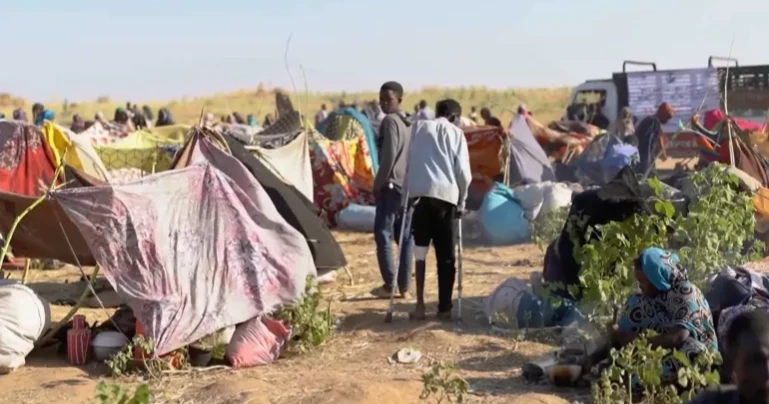
Survivors and aid agencies have reported widespread killings, abuse and disappearances after the paramilitary Rapid Support Forces (RSF) seized el-Fasher, the capital of Sudan’s North Darfur state, raising fears of a new humanitarian catastrophe.
El-Fasher, the last stronghold of the Sudanese army in Darfur, fell to the RSF on Sunday after an 18-month siege. Since then, the United Nations and international aid organisations have warned of mass killings, rape, and other atrocities.
Alkheir Ismail, a young man who fled to Tawila, about 50 km from el-Fasher, recounted how RSF fighters stopped a group of 300 people as they tried to escape. Only he survived after being recognised by one of the captors. “There was a young man I studied with in Khartoum University. He told them, ‘Don’t kill him.’ After that, the rest of the youths with me were killed,” he said.
Other survivors described being humiliated, beaten, and robbed. Tahani Hassan said RSF fighters assaulted her and threw their clothes on the ground. Fatima Abdulrahim, who fled with her grandchildren after walking five days under harsh conditions, said RSF fighters took all their possessions, and later learned that other girls in the group were raped.
Rawaa Abdalla, another survivor, said her father remains missing. RSF head Mohamed Hamdan “Hemedti” Dagalo later urged fighters to protect civilians and promised violations would be prosecuted. The RSF claimed to have arrested soldiers accused of abuses, but the UN questioned their commitment to investigating violations.
High-level RSF commanders dismissed survivor accounts as “media exaggeration” aimed at covering the army’s defeat. Both the RSF and the Sudanese army have faced repeated war crimes accusations during the conflict, which has killed tens of thousands, displaced around 14 million people, and triggered the world’s worst humanitarian crisis, according to the UN. Widespread famine and outbreaks of cholera and other deadly diseases are also reported.
More than 62,000 people fled el-Fasher between Sunday and Wednesday. Doctors Without Borders (MSF) said only about 5,000 reached Tawila, with many others believed to have been “killed, blocked, or hunted down” while trying to flee. MSF reported acute malnutrition among nearly all children under five who arrived on October 27.
Survivors told aid agencies that RSF fighters separated people by gender, age, or ethnicity, held many for ransom, and in some cases killed those unable to pay. UNFPA confirmed at least 460 people were killed at the el-Fasher maternity hospital on October 29.
In North Kordofan, over 36,000 people have fled the Bara locality, captured by the RSF last week. UN officials warned of killings and sexual violence in the area, with the region expected to be the next battleground.
Mohammed Elsheikh of the Sudan Doctors Network described the dire conditions of fleeing civilians, citing extreme temperatures and unsafe desert roads. Bara has seen intense fighting, with previous RSF attacks in July killing nearly 300 people, including children and pregnant women.
Source: AP