
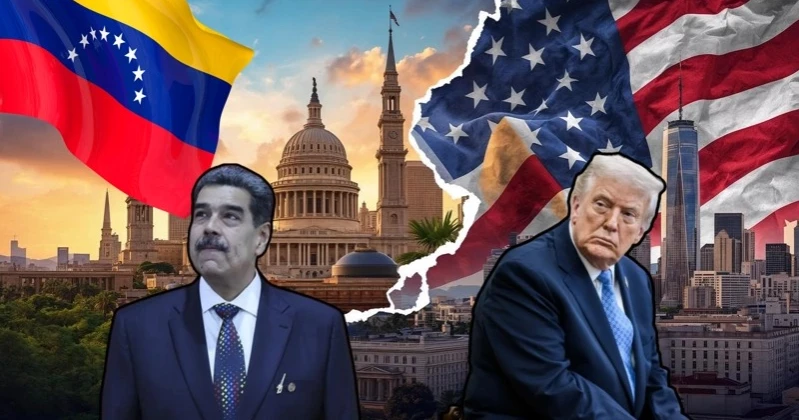
The U.S. operation to capture Venezuelan President Nicolás Maduro and his wife has raised unease about the future of the international legal framework.
Experts warn that the mission signals a shift toward unilateral use of force, challenging norms established after two world wars and codified in the United Nations Charter.
U.N. Undersecretary-General Rosemary A. DiCarlo told the Security Council that international peace and security depend on all nations adhering to the Charter’s provisions.
The Trump administration maintains that the seizure was legal, citing the designation of Venezuelan drug cartels as unlawful combatants and describing the operation as part of an armed conflict. U.S. Ambassador to the U.N. Mike Waltz called it a justified “surgical law enforcement operation.”
The mission aligns with the administration’s National Security Strategy, which emphasizes restoring “American preeminence in the Western Hemisphere.” However, the action has drawn criticism worldwide.
Leaders from China, Mexico, and Europe condemned the operation, with French Foreign Minister Jean-Noël Barrot stating it violated the principle of non-use of force central to international law. Russian U.N. Ambassador Vasily Nebenzya warned the operation marked a “return to lawlessness.”
Analysts say the operation could embolden similar unilateral actions, potentially destabilizing regions like Ukraine, Greenland, Taiwan, and the Middle East.
Trump’s criticism of Colombia and speculation about Greenland have already heightened tensions, while Maduro’s capture has alarmed Beijing regarding U.S. unpredictability in global affairs.
European leaders have called for upholding the principles of international law, though some allies, including Hungarian Prime Minister Viktor Orbán, argue that major powers often act beyond such legal constraints. Observers say the Venezuelan operation underscores the fragility of postwar international norms and the growing tension between national interests and global legal order.