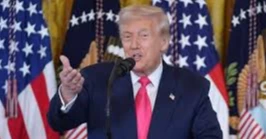
President Donald Trump announced Friday that he is eliminating U.S. tariffs on beef, coffee, tropical fruits, and a wide range of other commodities — a surprising shift as his administration faces growing criticism over high consumer costs.
Tariffs have been a cornerstone of Trump’s second-term economic strategy, aimed at boosting U.S. manufacturing through heavy taxes on imported goods. His sudden reversal on key everyday staples marks a major policy change, coming after recent off-year elections where voters cited economic worries and handed Democrats major victories in Virginia, New Jersey, and other states.
“We just rolled back some food tariffs, like on coffee,” Trump said aboard Air Force One en route to Florida shortly after the announcement.
When asked whether his tariffs had contributed to rising prices, Trump admitted they “may, in some cases,” but insisted that “other countries” have shouldered the burden.
Inflation, despite Trump’s repeated claims that it has disappeared during his presidency, remains high and continues to squeeze consumers.
The administration has maintained that tariffs boosted federal revenue and weren’t a primary driver of higher grocery costs. Democrats quickly framed the rollback as proof that Trump’s policies had been hurting Americans.
“President Trump is finally admitting what we’ve long said: his tariffs are raising prices,” said Rep. Don Beyer of Virginia. “After being punished in recent elections by voters angry about broken promises on inflation, the White House is now trying to spin this as a shift toward affordability.”
Concerns Over Grocery Costs
Trump imposed broad tariffs in April. He continues to deny they increased consumer prices, despite economic analysis showing otherwise.
Beef prices have been a particular flashpoint. Trump had pledged to address the issue, and tariffs on Brazilian beef — a major source — played a role in rising costs.
A new executive order lifts tariffs on tea, fruit juice, cocoa, spices, bananas, oranges, tomatoes, and some fertilizers. Several of these goods aren’t produced domestically, meaning the original tariffs did little to encourage U.S. production but did raise costs for consumers.
Food industry groups welcomed the move, saying that reducing import taxes will help stabilize supply and lower prices.
The White House explained that some initial tariffs are no longer necessary due to new trade agreements with Ecuador, Guatemala, El Salvador, and Argentina that improve access for U.S. products and may lower agricultural tariffs in return.
Earlier this week, Trump hinted to Fox News’ Laura Ingraham that tariff reductions were coming. “We’re going to lower some tariffs on coffee,” he said.
Tariff Revenue and Promised Checks
Despite the rollback, Trump reiterated aboard Air Force One that he still plans to use tariff revenue to send $2,000 checks to many Americans, possibly in 2026. He also suggested the same funds might go toward paying down the national debt, raising questions about feasibility.
Trump denied that issuing direct payments would worsen inflation, though he acknowledged that similar programs during the pandemic may have fueled price increases.
“This is money earned, not printed,” he said. “Everyone but the wealthy will get it. It’s real money — it comes from other countries.”