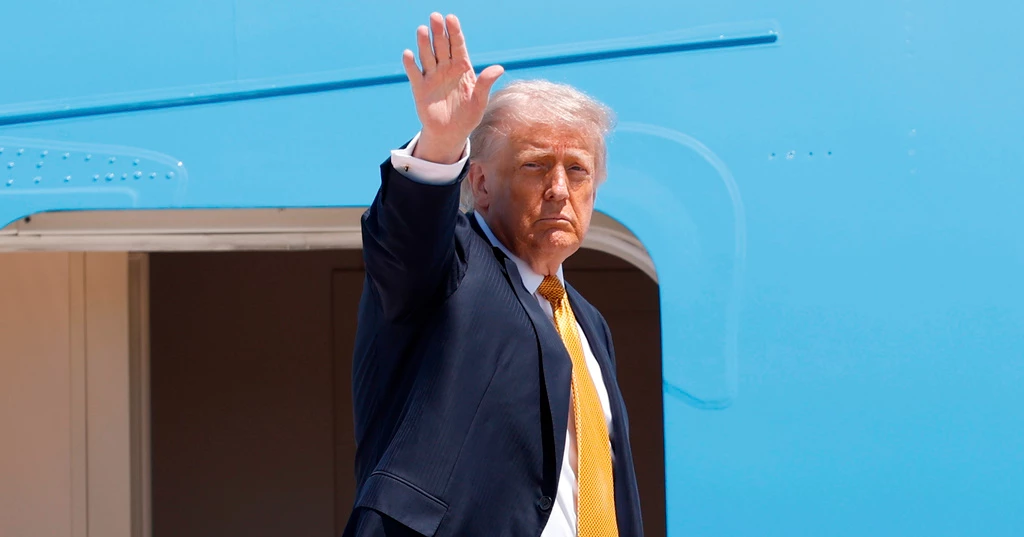
US President Donald Trump is set to arrive in Beijing on Wednesday for a highly anticipated summit with Chinese leader Xi Jinping, at a time when global tensions over war, trade and artificial intelligence are shaping the international agenda.
Speaking to reporters before departing the White House, Trump described the United States and China as the world’s two dominant powers, saying both are the strongest militarily.
The visit comes at a politically sensitive moment for Trump, whose domestic standing has been affected by rising inflation linked to the US and Israel’s conflict with Iran. The war has also disrupted global energy flows after the effective closure of the Strait of Hormuz, driving up oil and gas prices.
Trump is expected to focus heavily on trade during the talks, with Washington seeking agreements for increased Chinese purchases of US agricultural products and aircraft. His administration also hopes to begin discussions on creating a new “Board of Trade” mechanism to manage economic disputes and reduce tensions that escalated after tariff increases last year.
That earlier trade dispute triggered Chinese retaliation involving restrictions on rare earth exports, leading to a temporary truce last October.
Despite this, Iran remains a major backdrop to the visit, though Trump suggested it would not be a central topic in his discussions with Xi, saying the situation was already “under control.”
Taiwan is also expected to be a key point of discussion. The US has approved an $11 billion weapons package for the island, which China claims as part of its territory, although delivery has not yet begun. Beijing has strongly opposed the move, calling Taiwan a core “red line” in US-China relations.
At the same time, Taiwan’s importance in global semiconductor production — critical for artificial intelligence development — continues to shape US strategy. Washington has been pushing to expand domestic chip manufacturing while increasing imports from Taiwan this year.
Trump has signalled a generally positive tone ahead of the meeting, saying he expects a strong long-term relationship with Xi and suggesting a future reciprocal visit by the Chinese leader to the United States.
He also indicated he would ask Xi to open China further to US businesses, arguing that greater market access would benefit both sides.
Analysts, however, say China enters the talks from a relatively stronger position, with expectations that Beijing will seek relief from US tech restrictions and tariffs.
Beyond trade and Taiwan, Trump is also expected to raise the idea of a trilateral nuclear arms control agreement involving the US, China and Russia. However, China has previously shown little interest in such a deal, citing the significant gap between its nuclear arsenal and those of the two larger powers.
The last major nuclear arms treaty between Washington and Moscow expired in February, ending formal limits on the world’s two largest nuclear stockpiles for the first time in decades, while efforts to expand future agreements to include China have yet to gain traction.