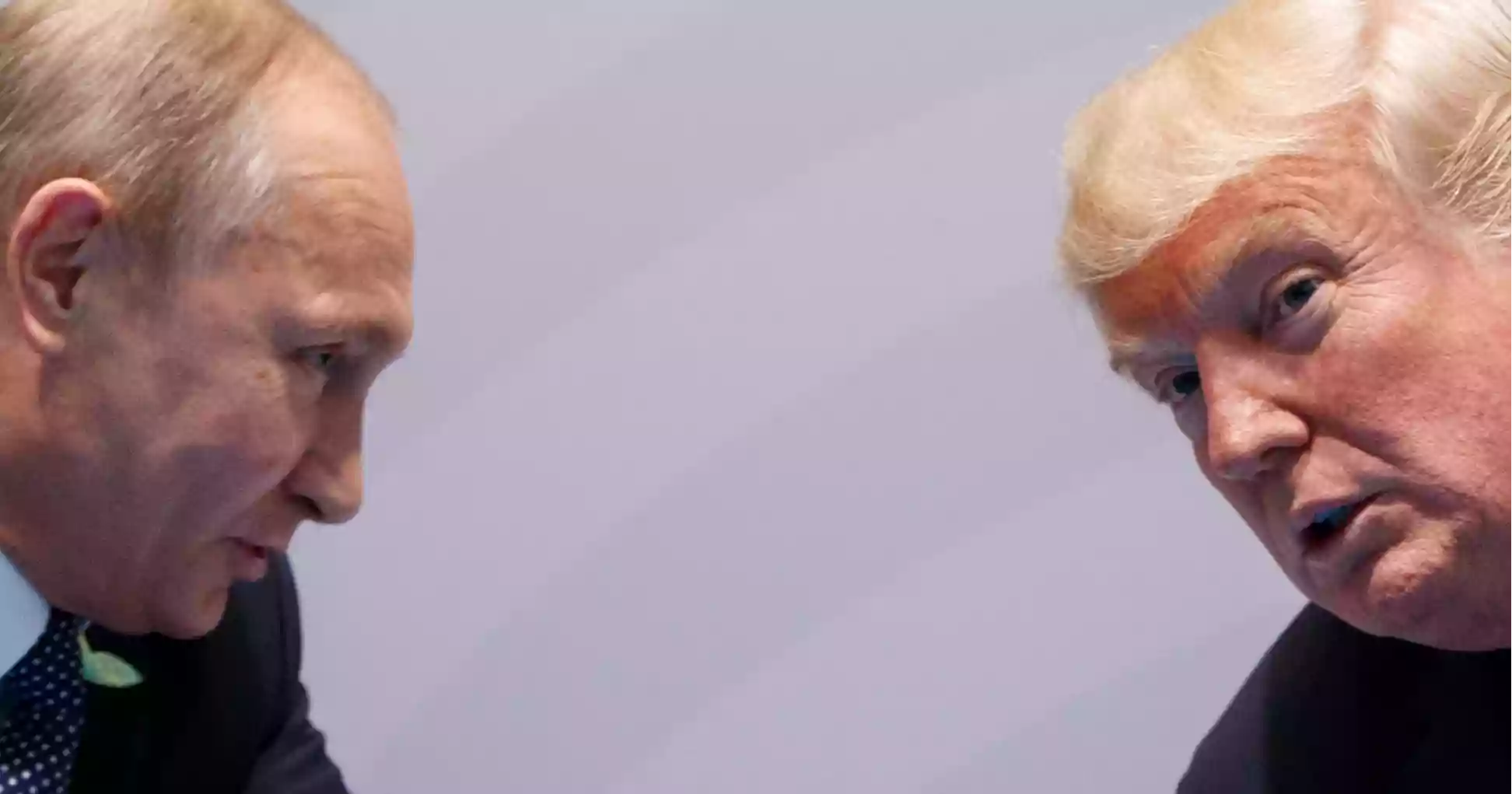
U.S. President Donald Trump met Russian President Vladimir Putin on Friday at a high-stakes Alaska summit that could shape the course of the war in Ukraine and redefine Moscow-Washington relations.
The one-on-one talks, followed by meetings with their delegations over a working breakfast and a joint press conference, mark the first face-to-face encounter between the two leaders in the conflict context. The summit was held at Joint Base Elmendorf-Richardson, providing a secure venue while symbolically emphasizing Alaska’s historical ties with Russia.
Trump, seeking to present himself as a global peacemaker and dealmaker, emphasized the possibility of a broad peace deal, including discussions on Ukrainian territorial concessions and security guarantees outside NATO. Putin aimed to solidify Russia’s gains and block Ukraine’s NATO ambitions. Ukrainian President Volodymyr Zelenskyy and European leaders were not invited, drawing criticism for sidelining Kyiv in talks directly affecting its sovereignty.
Trump heads to Alaska for high-level talks with Putin
Trump acknowledged a 25% chance of summit failure but floated a future three-way meeting with Zelenskyy if progress was made. Russian Foreign Minister Sergei Lavrov said Russia would maintain its clear position while avoiding pre-planning outcomes.
The summit drew international attention, with analysts noting that U.S. adversaries, including China, Iran, and North Korea, would watch closely for indications of Trump’s negotiating approach and credibility. Moscow-based commentators highlighted the meeting’s potential to strain trans-Atlantic unity and weaken Europe’s stance toward Russia.
As the war strains both Ukraine and Russia, the Alaska summit underscores the geopolitical stakes, with the outcome potentially influencing global security, NATO dynamics, and the ongoing conflict along the 1,000-kilometer front line in Ukraine.