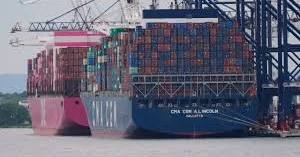
The United States on Thursday officially began enforcing new tariffs on imports from over 60 countries, following President Donald Trump’s sweeping announcement four months ago to impose broad trade duties while negotiating fresh trade agreements.
According to the White House, imports from the European Union, Japan and South Korea will now face 15% tariffs, while products from Taiwan, Vietnam, and Bangladesh will be taxed at 20%. Some African countries and others, such as Switzerland, will see even steeper rates, with tariffs reaching as high as 39% or more.
The Trump administration said it expects these measures will encourage foreign investment into the U.S., estimating hundreds of billions of dollars from the EU, Japan and South Korea. Officials believe the tariffs will bring clarity to economic direction and trigger renewed investments and job creation in the domestic manufacturing sector.
However, data so far indicate that the U.S. economy has slowed since the first wave of tariffs was introduced in April.
African Leaders Seek Reprieve
South African President Cyril Ramaphosa said he held a phone conversation with Trump ahead of a 30% tariff on some South African exports taking effect. His office noted that both leaders agreed to continue talks.
Neighbouring countries Botswana and Lesotho also expressed hopes of negotiating better terms. Lesotho, which originally faced a 50% rate, saw it reduced to 15%, but the government warns the rate still threatens its clothing industry and thousands of jobs linked to exports to the U.S.
Swiss Industry Sounds Alarm
Swiss tech association Swissmem decried the imposition of a 39% tariff on its goods, calling it a “horror scenario” for Switzerland’s economy. The group said tens of thousands of jobs could be at risk and warned that the higher duties put Swiss exporters at a disadvantage compared to EU and Japanese competitors.
Swiss President Karin Keller-Sutter held meetings in Washington in a last-ditch effort to halt the tariffs, but the rate took effect as scheduled. The Swiss Federal Council held an emergency session to assess the economic fallout.
South Korea Eyes Long-Term Strategy
Despite securing a last-minute deal to lower its tariff rate from 25% to 15%, South Korean Trade Minister Hankoo Yeo warned of continued global trade uncertainty. He urged swift action to support vulnerable sectors and diversify trade partnerships.
South Korea also committed to purchasing $100 billion in U.S. energy and investing $350 billion in the U.S., though details remain under discussion. Yeo confirmed that South Korean chipmakers like Samsung and SK Hynix will be exempt from the looming 100% semiconductor tariffs due to Seoul’s new trade designation.
Economic Impact Spreads
Japanese automaker Toyota reported a 37% drop in quarterly profits, largely attributing the slump to new U.S. tariffs. The company estimated that 15% duties cost it $3 billion last quarter. In contrast, Sony reported a 23% rise in profit, saying the tariff impact was lower than expected.
In India, the Federation of Indian Export Organisations warned that 55% of exports to the U.S. would be affected. President S.C. Ralhan said exporters cannot absorb the added costs, risking business losses. Meanwhile, Indian Prime Minister Narendra Modi reaffirmed his commitment to protect farmers' interests, amid U.S. demands for wider access to India’s agriculture market. Trump has also announced a fresh 25% tariff on India over its Russian oil purchases, bringing total duties to 50%.
Source: Agency