President Donald Trump’s escalating military campaign against Venezuela’s drug cartels is drawing comparisons to the U.S. war on terror, as his administration invokes post-9/11 legal powers to justify strikes on Latin American criminal groups.
Since July, the U.S. military has carried out at least five deadly strikes, killing 27 people on vessels Washington claims were smuggling narcotics. Legal experts say the campaign — and Trump’s reported authorization of covert CIA operations inside Venezuela — stretches the limits of international and U.S. law.
Trump has argued that the cartels, including the Venezuelan gang Tren de Aragua, constitute an “armed conflict” threatening American lives. But critics say that logic distorts legal frameworks intended for terrorist groups such as al-Qaida, not organized criminals.
“You can’t just call something war to give yourself war powers,” said Claire Finkelstein, a national security law professor at the University of Pennsylvania. “It makes a mockery of international law to claim we’re in an armed conflict with cartels.”
The United Nations Charter allows force only in self-defense, while Congress — not the president — has the constitutional authority to declare war. Still, efforts by Democrats to pass a war powers resolution limiting Trump’s authority were defeated in the Republican-led Senate.
Trump confirms CIA conducting covert operations in Venezuela, considers land strikes
Despite U.S. intelligence disputes over claims linking Venezuela’s government to drug smuggling and illegal migration, Trump defended the strikes, saying decades of Coast Guard enforcement had “been totally ineffective.”
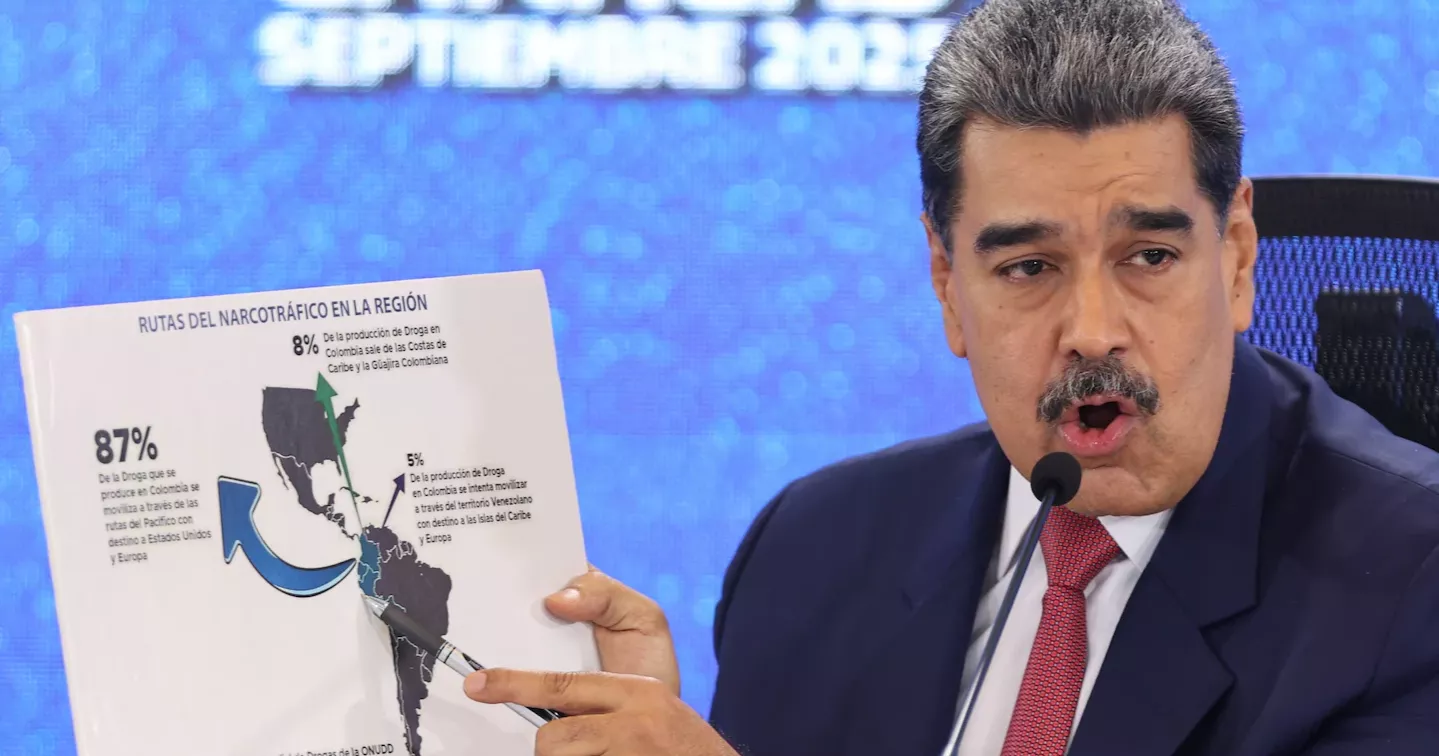
The president also hinted at the possibility of direct strikes inside Venezuela, a move that could sharply escalate tensions. His administration has already doubled the reward for Nicolás Maduro’s capture to $50 million, calling him “one of the largest narco-traffickers in the world.”
Critics note, however, that most U.S. overdose deaths stem from fentanyl trafficked via Mexico, not cocaine routed through Venezuela.
The International Criminal Court could theoretically investigate the killings in international waters, but its capacity has been weakened by internal scandals and U.S. sanctions.
Meanwhile, families of Venezuelans killed in the strikes face limited options for justice, as U.S. courts have narrowed the ability of foreign citizens to sue over American military actions.
Source: AP