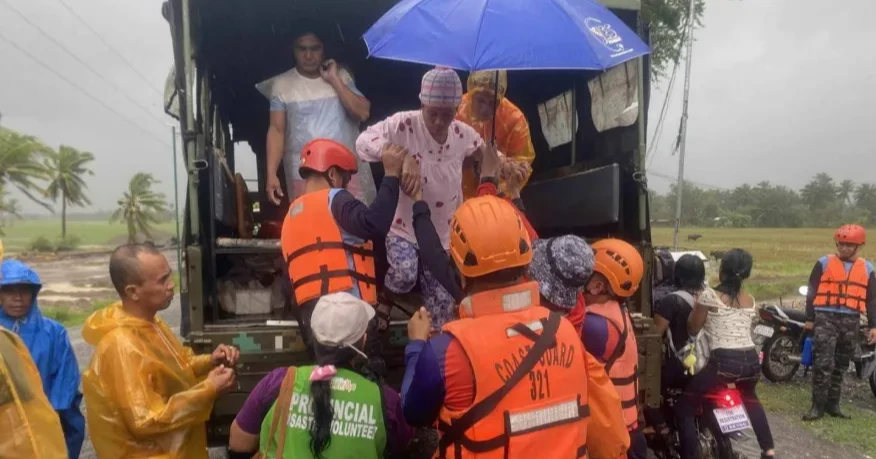
Typhoon Fung-wong moved out of the northwestern Philippines on Monday after triggering widespread floods and landslides, cutting power across several provinces, killing at least eight people, and displacing over 1.4 million residents.
The typhoon is expected to move northwest toward Taiwan. Fung-wong struck northeastern Aurora province Sunday night as a super typhoon, with sustained winds of up to 185 kph (115 mph) and gusts reaching 230 kph (143 mph), while the country was still reeling from Typhoon Kalmaegi, which killed at least 224 people in central provinces before hitting Vietnam.
Authorities reported multiple fatalities: one person drowned in Catanduanes, another was killed when her house collapsed in Samar, three children died in landslides in Nueva Vizcaya, and an elderly person was killed in a mudslide in Mountain Province. Two villagers were also killed, and two went missing in a landslide in Lubuagan, Kalinga.
Over 1.4 million people sought refuge in emergency shelters or with relatives before the storm’s landfall, with around 318,000 still in evacuation centers on Monday. At least 132 villages in northern provinces were flooded, trapping some residents on rooftops, and about 1,000 houses were damaged. Roads blocked by landslides were expected to reopen as the weather improved.
Bernardo Rafaelito Alejandro IV of the Office of Civil Defense warned that heavy rains still posed risks in northern Luzon, including metropolitan Manila, and rescue and relief operations were underway.
Philippine President Ferdinand Marcos Jr. had declared a state of emergency earlier this week due to the damage from Kalmaegi and the anticipated impact of Fung-wong, locally called Uwan. Schools and most government offices remained closed Monday and Tuesday, while over 386 flights were canceled and more than 6,600 passengers and cargo workers were stranded at ports.
The Philippines, prone to about 20 typhoons annually, is also vulnerable to earthquakes and has more than a dozen active volcanoes, making it one of the world’s most disaster-prone countries.