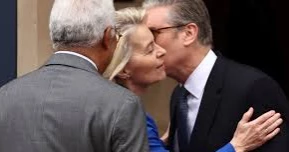
The United Kingdom and the European Union are set to unveil new agreements on fishing rights and defense cooperation as top officials meet in London for their first formal summit since Brexit.
British Prime Minister Keir Starmer met with European Commission President Ursula von der Leyen and other senior EU figures, marking what his government described as a pivotal step toward rebuilding ties with the 27-nation bloc.
According to British media reports, the two sides have reached a new agreement on fishing access for EU vessels in UK waters. Additionally, they are expected to reveal details of a renewed UK-EU defense and security partnership, which will grant the UK access to an EU defense funding mechanism.
Cabinet Office Minister Nick Thomas-Symonds, who led the negotiations, called it a “historic day” on social media, celebrating the UK’s renewed global engagement—though he did not elaborate on the specific agreements.
Starmer’s administration is hopeful the new deals will help revitalize the British economy, which has been strained by reduced EU trade due to increased post-Brexit costs and bureaucratic hurdles.
Rebuilding Bridges
Since taking office in July, Starmer has prioritized resetting UK-EU relations, which were strained following the 2016 Brexit referendum and subsequent departure from the EU in 2020. While current ties are governed by a trade agreement brokered by former Prime Minister Boris Johnson, Starmer believes there is room for improvement—particularly in trade and security cooperation.
“This is about improving livelihoods, strengthening national security, and creating jobs here in the UK,” Trade Secretary Jonathan Reynolds told Times Radio.
Starmer added that deepening ties with the EU could bring added benefits following recent UK trade deals with India and the United States.
Lingering Trade Barriers
While there are no tariffs on goods traded between the UK and EU, numerous non-tariff barriers remain. These include burdensome customs checks and complex documentation, which have disrupted trade flows. Post-Brexit visa restrictions have also hindered the mobility of professionals and cultural exchanges, from bankers and lawyers to musicians and students.
Since Labour replaced the Conservatives in government last year, both London and Brussels have shown renewed interest in improving their relationship—demonstrated most clearly through their joint response to Russia’s war in Ukraine.
Still, Starmer has made clear that the UK will not rejoin the EU’s single market or customs union, nor will it allow the free movement of people between the UK and the EU.
Focus Areas: Security, Fishing, and Youth Exchanges
Talks have centered on bolstering defense and security cooperation, and introducing a youth mobility scheme that would allow young people from both sides to live and work in each other’s countries temporarily. While potentially controversial in the UK, such programs already exist with countries like Australia and Canada.
Fishing, a politically sensitive but economically minor issue, has long been a contentious topic. Disputes over fishing rights nearly scuttled the Brexit deal in 2020. The new agreement aims to ease those tensions.
Discussions also covered harmonizing agricultural standards, which could help eliminate burdensome checks on food exports crossing the English Channel.
Thomas-Symonds expressed optimism about improving trade in food products. “We’ve seen trucks delayed up to 16 hours, with fresh produce going to waste due to red tape and certification requirements. We’re determined to change that,” he told the BBC.
Political Pushback
However, the new agreements may not come without political cost for Starmer. Critics from the Reform UK party and the opposition Conservatives have already labeled the deals a “surrender” to Brussels, even before full details have been released.
The growing influence of Reform UK, which performed strongly in recent local elections, and the potential return of Donald Trump—an outspoken Brexit supporter—could further complicate Starmer’s efforts.
“The reset risks being derailed either by unresolved issues like fisheries or by external political pressures, such as a negative U.S. reaction to closer UK-EU ties,” warned Jannike Wachowiak of the UK in a Changing Europe think tank.