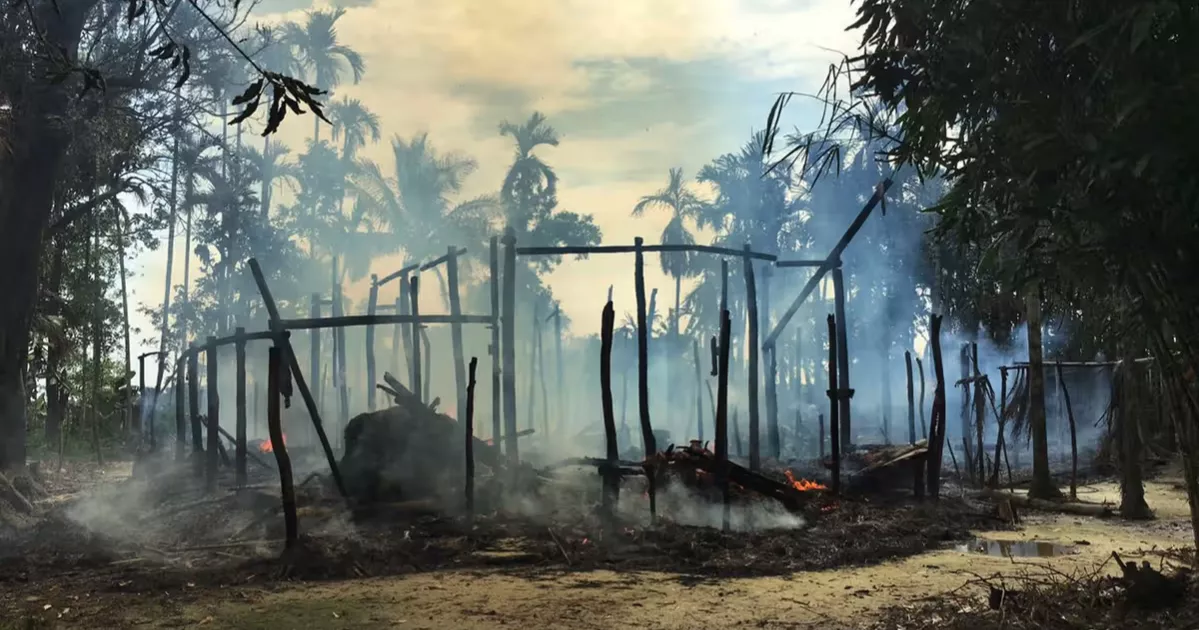
The United Nations’ top court on Monday began hearings on whether Myanmar committed genocide against the Rohingya ethnic minority, a case first brought by Gambia in 2019.
Gambia filed the case at the International Court of Justice (ICJ), accusing Myanmar’s military of violating the 1948 Genocide Convention during its so-called “clearance operations” in Rakhine state in 2017. Myanmar has consistently denied the allegations.
Lawyer Paul S. Reichler, representing Gambia at a preliminary hearing in 2022, warned that without ICJ oversight, Myanmar’s military “will be accountable to no one” and could continue persecuting the Rohingya.
Read more: Concerned about Rohingya children growing up as angry young people: Prof Yunus
The 2017 military campaign followed an attack by a Rohingya insurgent group. Security forces were accused of mass killings, sexual violence, and burning thousands of homes, forcing more than 700,000 Rohingya to flee to Bangladesh. Today, around 1.2 million Rohingya remain in overcrowded camps, where children face recruitment by armed groups and girls as young as 12 are subjected to sexual exploitation. Severe cuts in international aid last year further worsened the humanitarian situation.
Rohingya activist Lucky Karim of Refugee Women for Peace and Justice said the ICJ hearings offer “a beacon of hope” that justice for the persecuted minority will not go unheard.
Myanmar was initially represented at the court by Nobel laureate Aung San Suu Kyi, who denied genocide allegations and attributed the Rohingya exodus to clashes with insurgents. She is now imprisoned following the military takeover and convictions widely seen as politically motivated.
Myanmar challenged the ICJ’s jurisdiction, arguing that Gambia was not directly involved in the conflict. In 2022, the court rejected the claim, allowing the case to proceed. Experts say the outcome could set a precedent for other genocide cases, including a South African case against Israel.
Juliette McIntyre, an international law specialist at the University of South Australia, said while the legal standard for genocide is strict, the ICJ might broaden its interpretation, validating victims’ experiences and supporting further legal action.
Read more: Dhaka, Washington discuss upcoming elections, economic, Rohingya issues
A ruling of genocide could also strengthen proceedings at the International Criminal Court, which in 2024 requested an arrest warrant for Myanmar’s military chief, Senior Gen. Min Aung Hlaing, over crimes against the Rohingya—a request that remains pending.