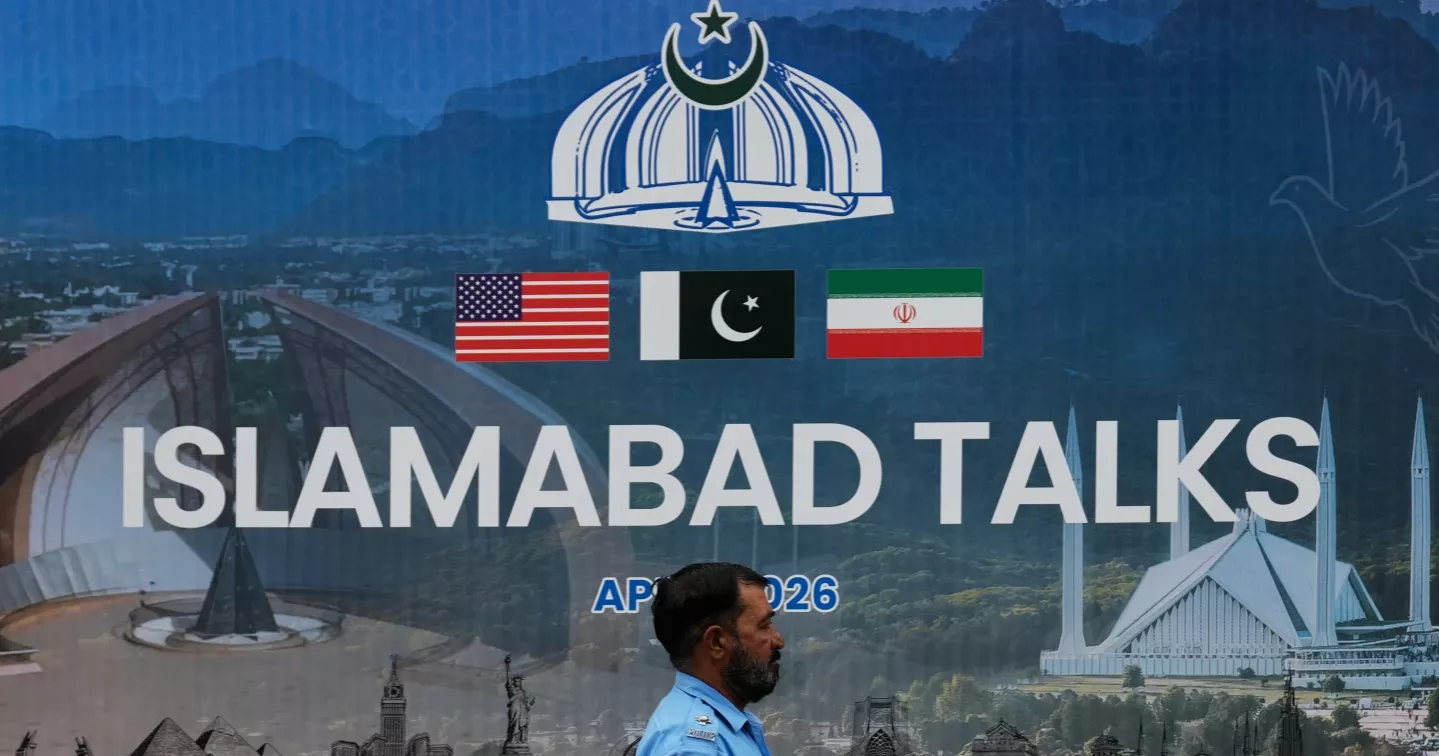
A high-level U.S. delegation led by Vice President JD Vance arrived in Pakistan on Saturday for crucial talks with Iranian officials, marking the first direct engagement since the outbreak of war more than a month ago. The discussions are expected to test whether the fragile ceasefire can be strengthened and potentially developed into a lasting peace agreement.
The Pakistan-brokered ceasefire remains uncertain as fresh tensions continue, with ongoing exchanges of fire between Israel and Hezbollah along the southern Lebanon border. Iran has also set preconditions for entering negotiations.
Iran’s delegation, headed by Parliament Speaker Mohammad Bagher Qalibaf, reached Islamabad early Saturday. He said on social media that talks would proceed only if a ceasefire in Lebanon is implemented and frozen Iranian assets are released.
Former U.S. President Donald Trump has repeatedly commented on the situation, claiming Iranian officials “have no leverage” and accusing them of exploiting the Strait of Hormuz, a critical global shipping route. He also asserted that Iran’s survival depends on negotiations.
Security in Islamabad was tightened ahead of the talks, with major roads sealed and residents urged to stay indoors, giving parts of the capital a restricted, near-lockdown appearance.
Pakistan Prime Minister Shehbaz Sharif described the situation as a critical turning point, saying the conflict had reached a “make-or-break” phase as parties attempt to move from a temporary ceasefire toward a durable settlement.
Vice President Vance is leading the U.S. side alongside special envoy Steve Witkoff and senior adviser Jared Kushner. Before departing Washington, Vance expressed optimism about the talks but warned that Washington would not tolerate bad-faith negotiations.
Separate discussions are also planned between Israel and Lebanon, expected to begin Tuesday in Washington, aimed at addressing the ongoing war involving Hezbollah. Beirut is seeking a direct framework to end hostilities, while Israel wants Lebanon to take responsibility for disarming Hezbollah.
However, disagreements over whether the Iran ceasefire includes Hezbollah have complicated efforts to reach a broader agreement. The conflict has intensified in Lebanon, with heavy casualties reported following Israeli airstrikes in recent days.
Meanwhile, tensions around the Strait of Hormuz remain a major global concern. Iran’s influence over the key waterway has disrupted global oil flows, pushing prices sharply higher and affecting international markets. Oil shipments through the strait have dropped significantly since the conflict began, highlighting ongoing instability in the region.
The Tasnim News Agency, which is affiliated with Iran’s powerful Revolutionary Guard, reported that the Iranian delegation is expected to meet Pakistani Prime Minister Shehbaz Sharif on Saturday at noon.
The Iranian negotiating team, led by Parliament Speaker Mohammad Bagher Qalibaf and including Foreign Minister Abbas Araghchi, also held a meeting late Friday with Pakistan’s army chief, Field Marshal Asim Munir.
These meetings come ahead of crucial Iran–U.S. talks in Islamabad aimed at finding a long-term solution to the ongoing conflict in the Middle East.
Meanwhile, Pakistan has established a modern media center to facilitate coverage of the negotiations by local and international journalists, Information Minister Attaullah Tarar said.
He explained that the facility at the Jinnah Convention Centre is equipped with high-speed internet and other free services to assist reporters. Shuttle buses have also been arranged to transport journalists between the media center and a hotel located in the city’s main commercial area.
Pakistan has also introduced visa-on-arrival facilities for journalists and official delegations arriving from both the United States and Iran for the talks, which are being referred to as the “Islamabad talks.”
Inside the media centre, rows of workstations with laptops and charging points have been set up for reporters to file their stories. Large screens display major local and international news channels, while separate spaces have been designated for live broadcasts, press briefings, and interviews.