
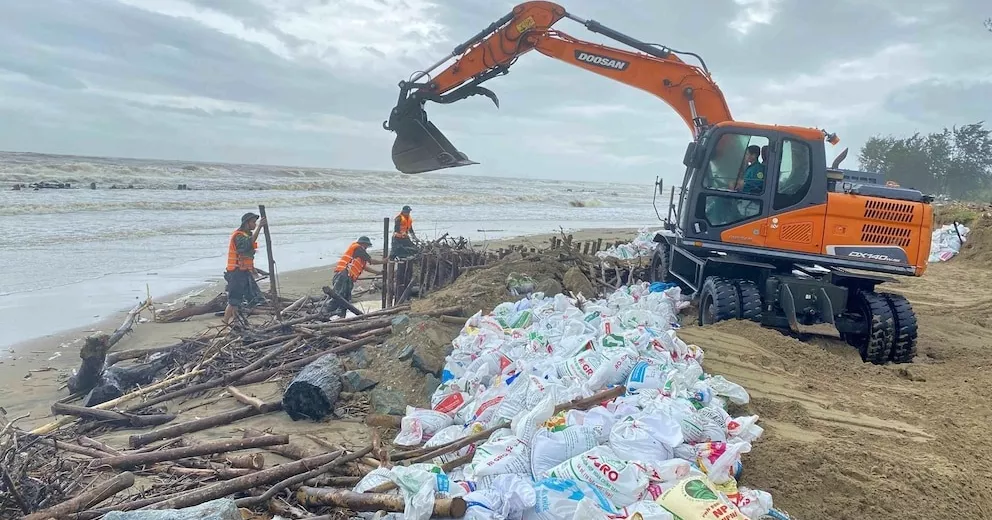
Vietnamese authorities evacuated thousands from central and northern provinces Sunday as Typhoon Bualoi accelerated toward the country, with landfall expected later in the day.
The storm had already claimed at least 20 lives in the central Philippines since Friday, mainly due to drownings and falling trees, and caused widespread power outages. Around 23,000 families were moved to over 1,400 emergency shelters.
Bualoi is forecast to bring winds of up to 133 kph (83 mph), storm surges exceeding one meter (3.2 feet), and heavy rainfall, raising the risk of flash floods and landslides.
Vietnam’s weather agency reported the typhoon was about 200 kilometers (124 miles) east of central Vietnam early Sunday, moving northwest, with landfall likely between Quang Tri and Nghe An provinces.
Authorities have grounded fishing boats in the north and center and ordered evacuations. State media said Da Nang will relocate more than 210,000 residents, while Hue is preparing to move over 32,000 coastal people to safer areas.
The Civil Aviation Authority suspended operations at four coastal airports, including Danang International, with several flights rescheduled.
Heavy rain since Saturday night has already caused flooding in Hue, sweeping away at least one person, damaging roofs, and inundating streets. In Quang Tri, one fishing boat sank and another became stranded; eight people were rescued, with three still missing at sea.
Forecasters warned of continued heavy rainfall through Oct. 1, increasing flood and landslide risks across northern and central provinces.
Bualoi is the second major storm to threaten the region this week, following Typhoon Ragasa, which killed at least 28 in the northern Philippines and Taiwan before hitting China and dissipating over Vietnam Thursday.
Experts say global warming is intensifying storms like Bualoi, as warmer oceans provide more energy, leading to stronger winds, heavier rainfall, and changing precipitation patterns in East Asia.