
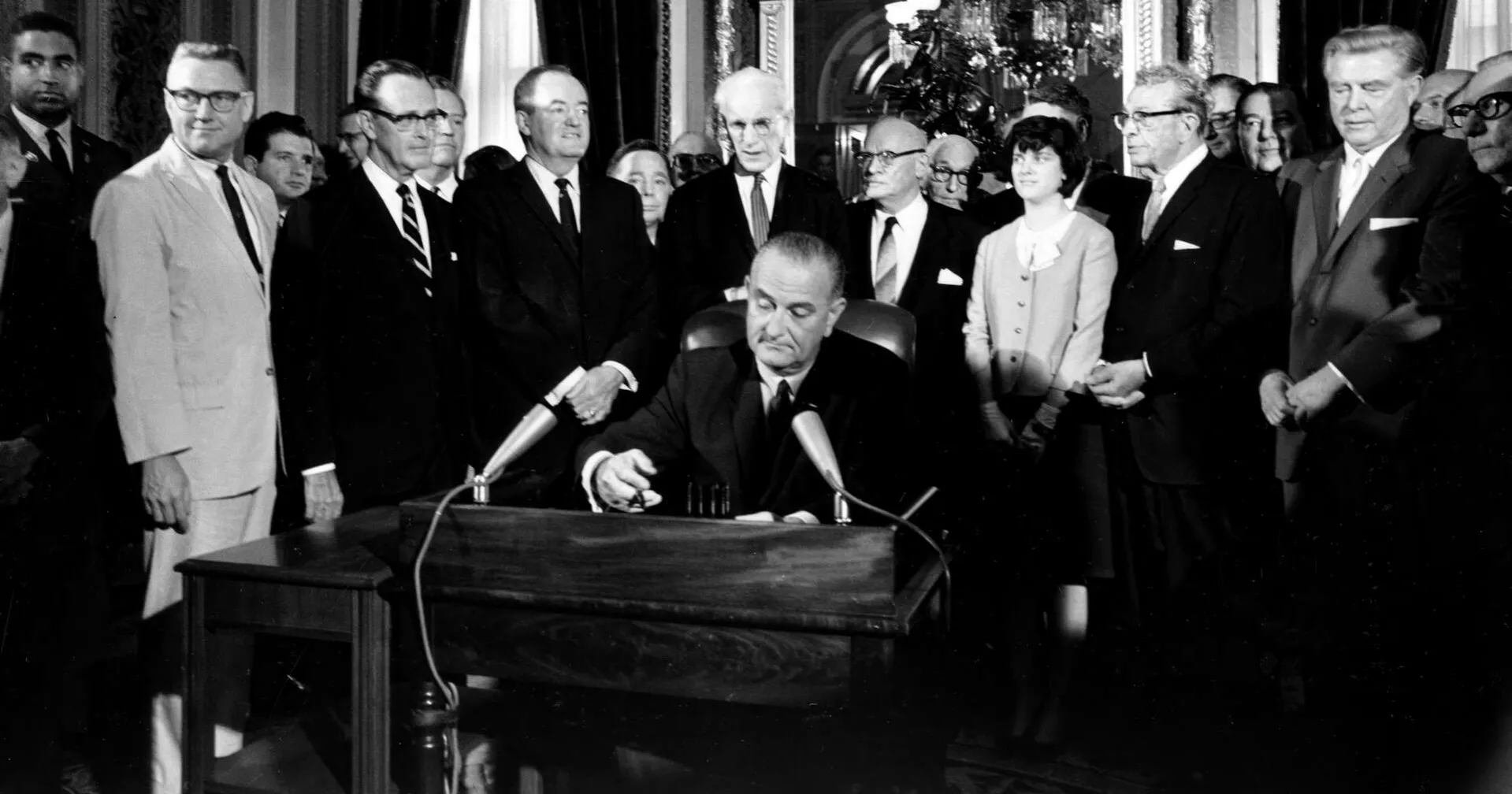
The United States on Wednesday marks 60 years since President Lyndon B. Johnson, joined by civil rights leader Martin Luther King Jr., signed the historic Voting Rights Act into law — a measure that many consider a cornerstone of American democracy.
Enacted in 1965, the law aimed to eliminate racial discrimination in voting, particularly targeting longstanding barriers faced by Black voters. However, legal experts and rights groups warn that the landmark legislation is facing growing threats.
The act's gradual erosion began with a 2013 Supreme Court decision that removed the requirement for federal approval before certain states with histories of voter suppression could change their election laws. Within hours, some states introduced restrictive measures. The trend has continued, especially after the 2020 election and unsubstantiated claims of voter fraud by former President Donald Trump.
In 2023, the Supreme Court upheld a key provision of the act. However, the upcoming term includes cases that could weaken those protections further. Voting rights advocates say the outcomes could determine the law’s future relevance.
“We’re at a critical juncture,” said Demetria McCain of the NAACP Legal Defense Fund, warning of persistent attacks on voting rights for communities of color.
One recent legal victory for Native American communities in North Dakota may be short-lived. In 2024, the Turtle Mountain and Spirit Lake tribes successfully argued for a new legislative map that gave them better representation. However, a federal appeals court later ruled that private individuals and groups cannot file such lawsuits — a significant departure from decades of precedent.
The Supreme Court has put the ruling on hold while it considers whether to hear the case. Advocates note that nearly 87% of claims under Section 2 of the Voting Rights Act have been brought by individuals or private organizations, not the federal government.
Meanwhile, another key case related to congressional districting in Louisiana is also pending before the court. It could alter or reverse a 2022 decision that preserved a majority-Black district in Alabama. Legal experts say the court’s request for additional arguments indicates uncertainty among justices.
Under the current administration, the U.S. Justice Department has reportedly scaled back its focus on voting rights enforcement, drawing criticism from civil liberties groups. Federal legislative efforts to restore protections — including the John Lewis Voting Rights Act — have stalled in Congress.
Former President Trump, seeking to reshape voting regulations, signed an executive order earlier this year that would require proof of citizenship to vote, although much of it has been blocked by courts.
Experts say the patchwork of voting laws across states now threatens equal access to the ballot.
“Increasingly, the experiences of voters depend on where they live,” said Sean Morales-Doyle of the Brennan Center for Justice.
Source: Agency